10 September, 2026
Two tiles can look almost identical in a showroom yet perform very differently after years of foot traffic, spills, cleaning, and moisture. The difference is rarely based on appearance alone. It often comes down to material control, manufacturing accuracy, surface performance, and careful product testing.
Still, the word “premium” is not proof of quality by itself. Standard tiles can also be durable and attractive when they are used in the right setting. This guide explains what is the difference between premium tiles and standard tiles, from edge precision and water absorption to installation cost and long-term value.
What Are Premium Tiles and Standard Tiles?
What qualifies a tile as premium?
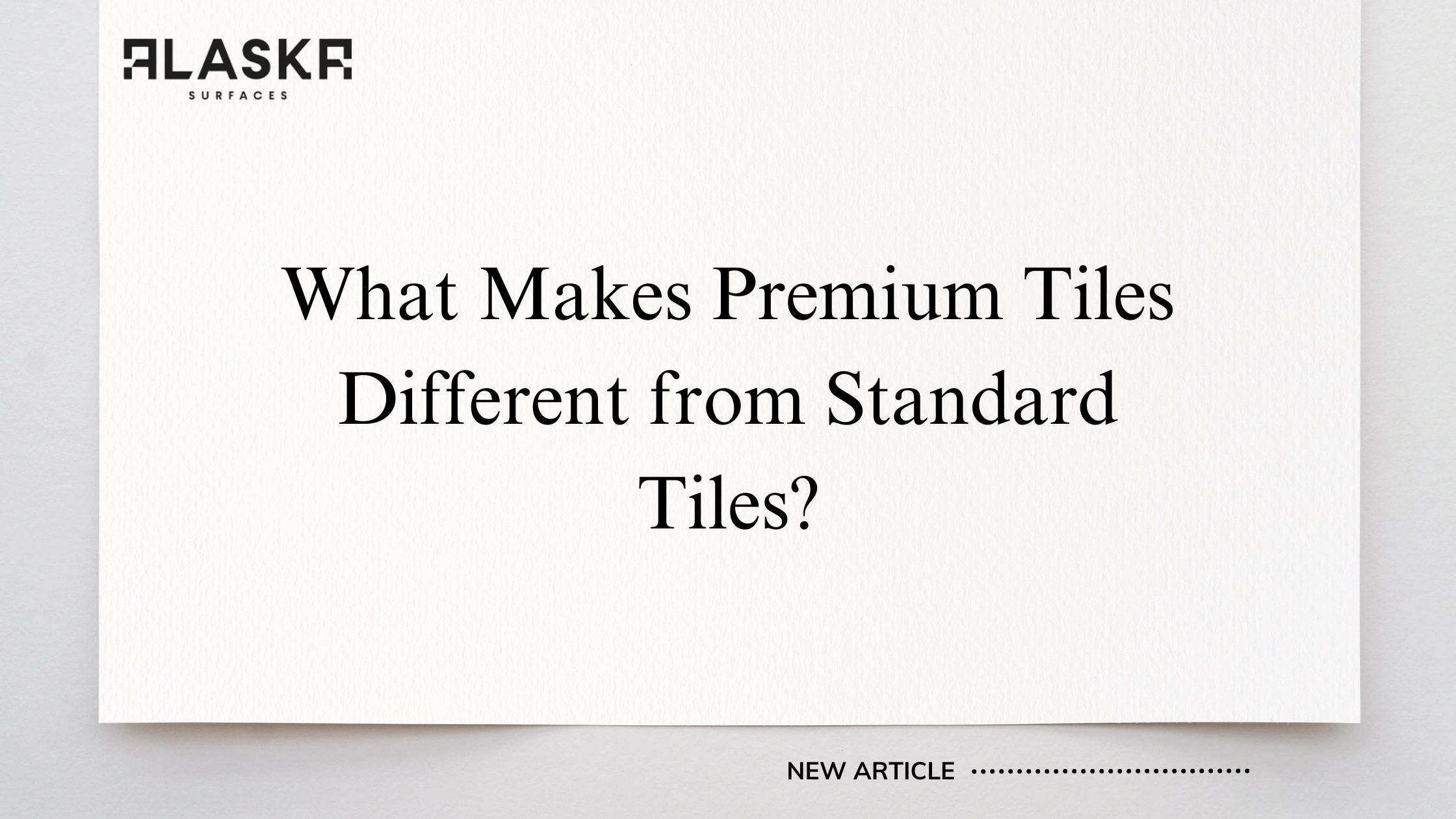
Premium tiles usually combine refined design with tighter manufacturing and sorting controls. Their size, thickness, shade, and caliber tend to be more consistent. This helps create a cleaner finished surface, especially across large floors or open-plan spaces.
Many premium porcelain tiles and premium ceramic tiles also feature high-resolution digital printing. A collection may include several unique design faces, reducing obvious pattern repetition. Marble veins, stone textures, concrete effects, and wood grains can therefore appear more natural.
Other possible features include rectified edges, refined matte or polished finishes, clear batch identification, protective packaging, and detailed technical documents. However, buyers should confirm these qualities rather than assume every expensive product includes them.
What is considered a standard tile?
A standard tile is generally a practical, cost-conscious product made for common residential or light-use applications. It may have simpler patterns, fewer sizes, pressed edges, or more visible print repetition. Acceptable shade and size variations may also be broader.
This does not make standard tiles poor products. A compliant ceramic tile can be an excellent choice for a backsplash, decorative wall, utility room, or low-traffic space. The key is matching its rating and performance to the intended use.
Premium Tiles vs Standard Tiles Comparison
Raw materials and manufacturing control
Premium option: More controlled formulations, pressing, firing, glazing, sorting, and inspection often support greater consistency.
Standard option: Functional formulations may allow broader visual or dimensional variation while remaining suitable for their stated use.
Dimensional precision
Premium option: Tighter tolerances and rectified formats are more common, helping installers create regular joints.
Standard option: Pressed edges and minor size differences may require slightly wider grout joints.
Design and finish
Premium option: Higher print definition, more design faces, refined textures, and realistic stone or wood effects.
Standard option: Simpler graphics and more repetition, which may be acceptable in small or functional areas.
Performance and price
Premium option: Often selected for demanding floors, architectural interiors, and projects needing documented performance. The initial price is usually higher.
Standard option: Often provides better upfront affordability for low-to-moderate-use areas.
Rectified edges and dimensional accuracy
Rectified porcelain tiles are mechanically finished after firing to create precise, straight edges. They support narrower and more uniform grout joints, giving floors and walls a neat, continuous look.
Rectification does not make a tile stronger, nor does it remove the need for grout. A flat substrate, suitable joint width, correct adhesive coverage, and skilled installation are still needed. Without these steps, even an accurate tile can show lippage between adjacent pieces.
Digital design, surface finish, and variation
Digital glazed tiles can reproduce fine veining, color shifts, and natural textures. Higher-tier collections often offer more unique faces, so repeated patterns are less obvious across large areas.
Finish also affects both appearance and use. Polished porcelain tiles reflect light and can make a room feel more open. Matte finish tiles provide a softer look and may be a more practical choice where glare, dirt visibility, or traction is a concern. A polished surface should not be assumed suitable for wet floors without verified slip data.
Durability, stains, scratches, and moisture
No tile should be described as completely scratch-proof. A scratch-resistant tile surface can still be damaged by abrasive grit, dragged furniture, or unsuitable cleaning tools. Surface durability depends on the glaze, finish, intended-use rating, and tested abrasion performance.
Stain-resistant porcelain tiles are useful in kitchens, entries, and commercial interiors, but grout selection and maintenance also matter. Water absorption is another key measure. Under recognized standards, porcelain generally has water absorption of 0.5% or less. ASTM C373 is one method used to test absorption.
For floors, buyers should also review breaking strength, visible abrasion, stain resistance, chemical resistance, and slip information. Relevant methods may include ASTM C648, ASTM C1027, ASTM C1378, and ANSI A326.3. ISO 13006, EN 14411, and ANSI A137.1 provide broader classification and performance frameworks.
Are Premium, Porcelain, Ceramic, and Vitrified Tiles the Same?
Ceramic tiles vs porcelain tiles
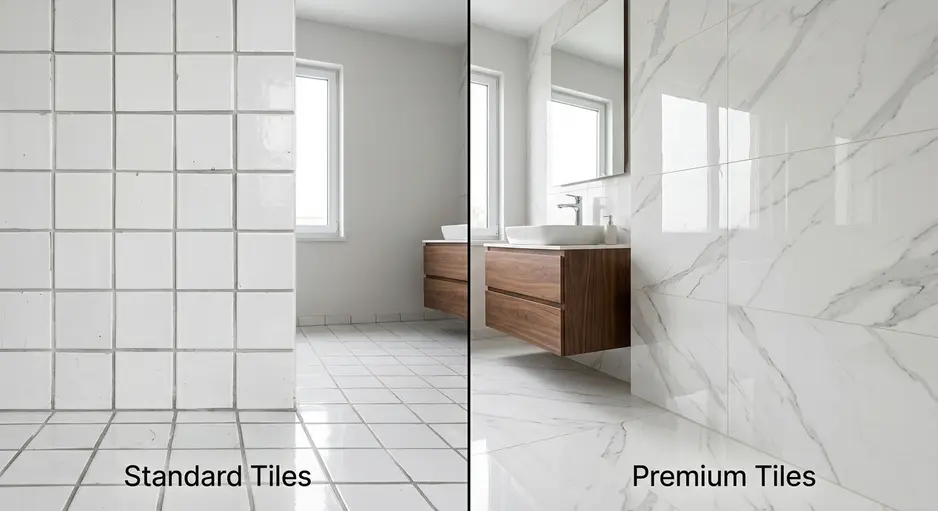
Porcelain is a category of ceramic tile produced to meet lower water-absorption requirements. Its dense body often makes it suitable for moisture-prone rooms and demanding floors when the specific product is rated for those uses.
Traditional ceramic tile can still be the smarter option for indoor walls, backsplashes, and light residential areas. Not every porcelain product is better than every ceramic product. The right choice depends on surface performance, installation, location, and technical ratings.
Are premium tiles better than vitrified tiles?
Premium and vitrified do not describe the same thing. “Premium” refers to a market or quality tier. “Vitrified” describes a dense, low-porosity manufacturing result. Vitrified floor tiles can be either premium or standard based on their tolerances, design, finish, testing, and quality control.
Terminology also varies between markets. When comparing premium tiles vs vitrified tiles, request a current technical sheet instead of relying on the product name.
Does a rectified or polished finish mean higher quality?
Not by itself. Rectified describes edge precision, while polished describes the surface finish. Neither feature confirms breaking strength, wear resistance, traction, or suitability for a particular room. A well-tested premium matte product may outperform a polished option in a busy entrance or wet area.
Where Do Premium Tiles Make the Biggest Difference?
Luxury residential flooring
Consider a modern open-plan home with large-format, rectified stone-look porcelain. Multiple design faces limit repetition, while precise joints help connect the kitchen, dining room, and living area. This creates the calm, cohesive finish many buyers expect from luxury residential flooring.
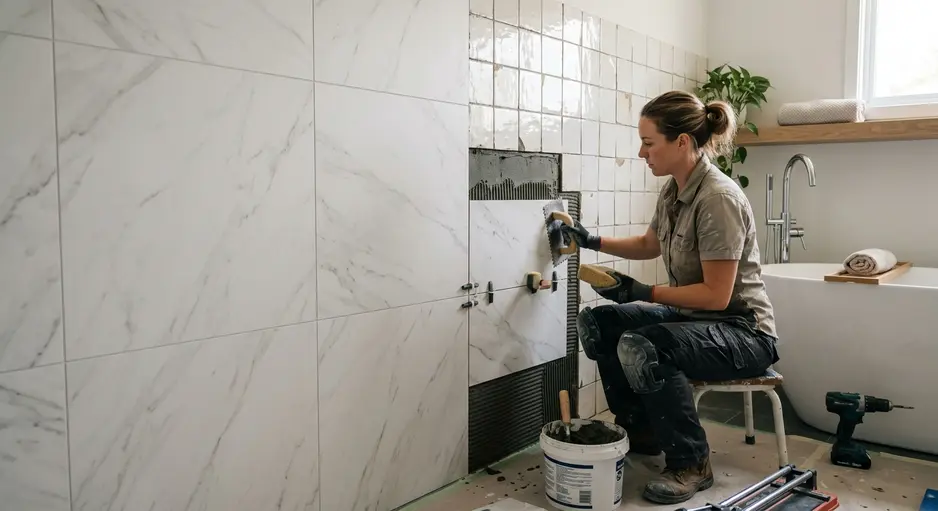
Large luxury floor tiles still require careful preparation. The substrate must be flat, and the installer must plan cuts, adhesive coverage, grout joints, and movement accommodation. Product quality cannot correct a poorly prepared base.
Bathrooms, kitchens, and premium wall tiles
In bathrooms and kitchens, focus on low water absorption, cleanability, stain resistance, and suitable traction. The best premium tiles for modern homes should match the exact surface—not just the room. A wall tile should never be assumed safe for floor use.
Premium wall tiles may provide value through detailed printing, texture, large formats, or coordinated patterns rather than high mechanical strength. For wet floors, verified slip information is more important than gloss or price.
Commercial tile applications
A hotel lobby, restaurant, showroom, or retail floor needs more than an attractive finish. Commercial tile applications may face heavy traffic, grit, rolling loads, frequent cleaning, and occasional impacts.
Buyers should review abrasion performance, breaking strength, stain resistance, slip characteristics, and replacement availability. Consistent batches and spare stock are valuable when repairs must blend into an existing floor.
When standard tiles may be the smarter choice
- Decorative backsplashes and feature walls
- Low-traffic guest rooms
- Utility rooms and storage areas
- Short-term rental refresh projects
- Budget-sensitive spaces with moderate performance needs
Using standard tiles in the right area can release more of the project budget for substrate preparation and professional installation. These often have a greater effect on service life than decorative features alone.
How to Choose Premium Tiles Without Overpaying
Use this technical tile checklist
- Confirm whether the product is approved for walls, floors, indoor areas, outdoor settings, or commercial traffic.
- Ask for water-absorption and breaking-strength results.
- Review abrasion or wear data for glazed flooring.
- Check slip-test information for wet and busy areas.
- Compare nominal size with actual size and caliber.
- Confirm whether the edges are pressed or rectified.
- Review shade variation and the number of unique design faces.
- View full-size samples under the project’s real lighting.
- Buy from the same production batch where possible.
- Order about 10% to 15% extra for cuts, breakage, layout needs, and future repairs. Complex plans may require more.
- Check substrate and installation needs before selecting large formats.
- Read warranty conditions and exclusions.
Questions to ask a manufacturer or supplier
When assessing a premium tiles manufacturer or international premium tile supplier, ask which ISO, EN, ANSI, or ASTM methods were used. Request current technical sheets and confirmation that the product suits the expected traffic and environment.
Also ask about shade and caliber controls, samples, replacement stock, minimum order quantities, lead times, packaging, and pallet details. When evaluating a premium tiles exporter worldwide, confirm export packaging, shipping documents, breakage procedures, and delivery availability before ordering.
Contact Alaska Surfaces to discuss available formats, finishes, samples, technical specifications, order quantities, and delivery or export availability. Confirm every requirement directly before final product selection.
Are Premium Tiles Worth the Higher Price?
Compare installed value, not tile price alone
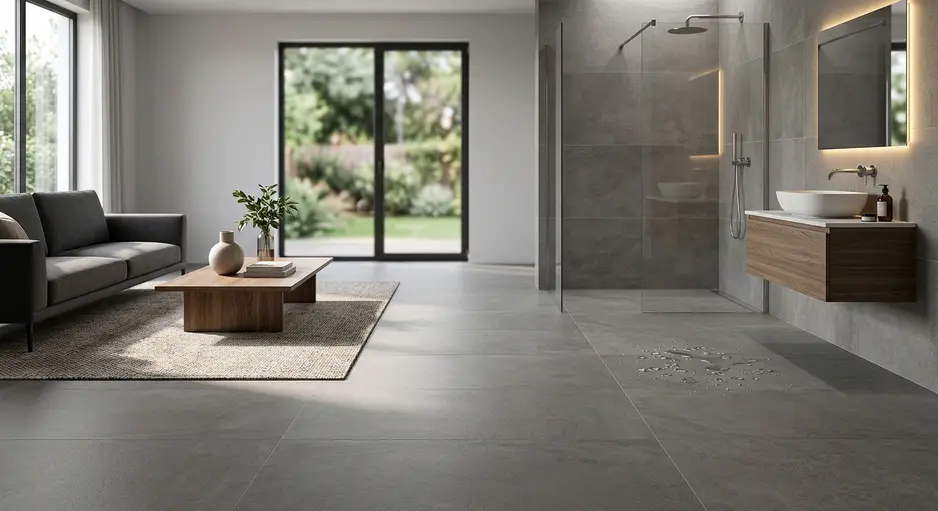
The tile price is only one part of a finished project. Total cost can include substrate preparation, adhesive, grout, cutting, specialist labor, cleaning, maintenance, repairs, and spare material. Commercial projects may also face downtime if damaged tiles cannot be replaced quickly.
The benefits of premium quality tiles can include a more refined appearance, better dimensional consistency, less print repetition, stronger application-specific performance, and easier batch coordination. When correctly specified, these qualities may reduce repair risk and provide better long-term value.
When paying more does not add value
- The added feature is decorative but irrelevant to the space.
- The product has no reliable technical documentation.
- A glossy finish is chosen where traction matters more.
- The installation team cannot meet large-format requirements.
- An expensive decorative tile is used in a hidden utility area.
What Makes Premium Tiles Different from Standard Tiles?
Final Verdict: Choose Performance, Not Just a Label
In a premium tiles vs standard tiles comparison, higher-tier products often offer better design detail, dimensional consistency, finish selection, and application-specific performance. Standard options remain practical for many decorative, low-traffic, and budget-sensitive areas.
Compare samples, technical data, installation needs, total cost, and supplier support before deciding. For help selecting a suitable surface, contact Alaska Surfaces to request current product guidance and confirm the specifications required for your project.
Frequently Asked Questions
1. What is the difference between premium tiles and standard tiles?
The main differences often involve manufacturing consistency, dimensional accuracy, print quality, finish options, documentation, and price. High quality tiles should have performance data suited to their intended use. Standard products can still perform well in low-traffic or decorative settings.
2. How can you tell whether a tile is high quality?
Check flatness, edge consistency, shade control, batch details, intended-use ratings, and technical data. Review absorption and relevant surface tests. A credible supplier should explain where the tile can be used and provide clear installation guidance.
3. Are premium porcelain tiles better than ceramic tiles?
Not in every setting. Porcelain generally has lower water absorption and is often chosen for demanding floors. Ceramic can be an attractive, economical option for indoor walls and light-use areas. Application matters more than the category alone.
4. Are polished porcelain tiles suitable for bathrooms?
They may suit bathroom walls or certain dry areas. For wet floors, suitability should be based on verified slip data and local requirements. Matte or textured surfaces are often considered where added traction is needed.
5. What are the best tiles for long-lasting flooring?
Properly specified porcelain or vitrified products are common choices. Look for suitable abrasion, stain, breaking-strength, and slip performance. Even the best tiles for long-lasting flooring need a stable substrate and correct installation.