8 September, 2026
Choosing tiles for a Greek project involves more than finding an attractive design. Importers, architects, developers, and contractors must also review technical ratings, batch consistency, documentation, packaging, and delivery terms.
Alaska Surfaces supports international buyers looking to source Brave Tiles from India. Ceramic and porcelain options may suit residential, hospitality, retail, and commercial spaces, subject to the specifications of each product.
This guide explains how to compare products, review technical data, plan bulk orders, and manage shipping to Greece. Contact Alaska Surfaces to request the current Brave Tiles catalogue, product information, packing details, and an export quotation.
What Should Greek Buyers Expect from a Brave Tile Supplier?
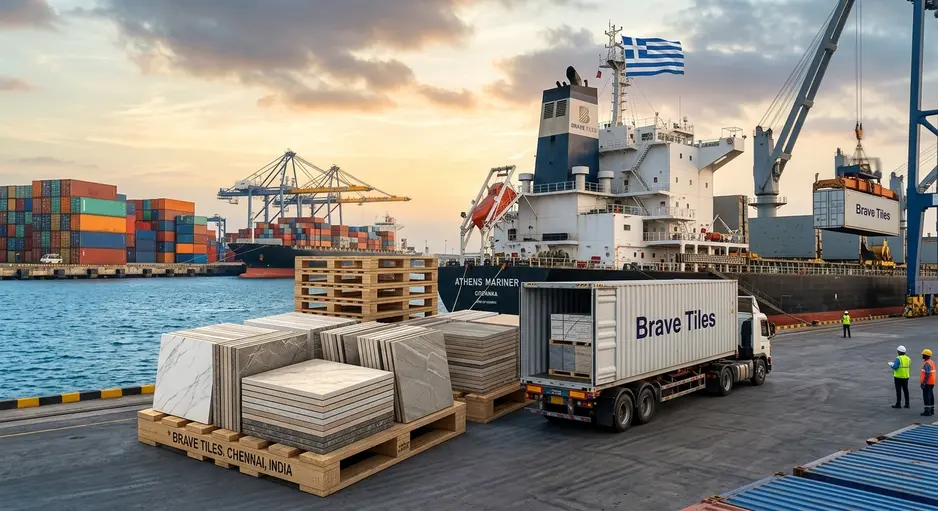
A dependable supplier provides more than photographs and a basic price list. Greek buyers need clear information that helps architects, installers, and procurement teams make informed decisions.
Verified Product and Technical Information
Before approving any product, ask for the available technical and packing information. This may include:
- Tile body classification
- Nominal and actual dimensions
- Tile thickness and edge type
- Glazed, polished, matte, or textured finish
- Water absorption rating
- Abrasion and slip-resistance information
- Recommended floor tile applications or wall tile applications
- Carton quantity, pallet details, and gross weight
Do not assume that tiles with a similar appearance offer the same performance. Each reference should be checked against its intended use.
Samples, Shade Control, and Batch Consistency
Physical samples allow buyers to review colour, texture, finish, and edge quality before placing a bulk order. Since screens and printed catalogues can display colours differently, sample approval is an important procurement step.
Ceramic products may show natural shade and calibre differences between production batches. Where possible, order the full project quantity from one batch. Buyers should also retain spare material for later repairs or replacements.
Why Source Brave Tiles from India?
India gives international buyers access to varied ceramic and porcelain formats, decorative tile designs, and export-oriented production. The final choice should still be based on approved samples, documented specifications, project needs, and total landed cost.
Explore the Brave Ceramic and Porcelain Tile Collection
Brave Ceramic Tiles for Walls
Brave ceramic tiles may be considered for bathroom walls, kitchen splashbacks, residential interiors, retail displays, and decorative feature walls. Their suitability depends on the individual product specification.
A ceramic tile intended for walls should not automatically be used on a floor. It may not have the strength or abrasion resistance needed for foot traffic. It may also be unsuitable for frost-exposed outdoor locations.
Brave Porcelain Tiles for Floors and Busy Areas
Brave porcelain tiles may suit living rooms, kitchens, hotel rooms, offices, reception areas, cafés, and retail floors. Certain products may also work outdoors when their frost, slip, strength, and intended-use data support that application.
Low water absorption is useful, but it is not the only selection factor. Buyers should also consider traffic, surface wear, expected loads, cleaning routines, substrate conditions, and installation methods.
How Are Ceramic and Porcelain Tiles Different?
- Typical use: Ceramic tiles are often selected for walls and light-duty areas. Porcelain is commonly considered for floors, walls, and higher-use spaces.
- Water absorption: Ceramic bodies generally absorb more water, while porcelain bodies normally have lower absorption.
- Handling: Ceramic can be easier to cut. Porcelain is usually denser and may need suitable cutting tools.
- Outdoor use: Suitability is product-specific. A porcelain label alone does not confirm frost resistance.
- Specification focus: Floor products require careful review of traffic, abrasion, slip, strength, and installation conditions.
Where Can Brave Tiles Be Used in Greece?
Brave Tiles for Residential Projects in Greece
Apartments, villas, kitchens, bathrooms, living areas, balconies, and renovation projects all have different needs. Kitchens benefit from easy-to-clean surfaces. Bathroom floors need careful slip assessment, while living spaces may focus more on appearance and comfort.
Tile size should match the room, layout, grout plan, and substrate. Buyers often allow about 7% to 15% extra for cuts, breakage, complex patterns, and future repairs. An architect or installer should confirm the final allowance.
Exterior balconies and terraces require added care. Drainage, climate exposure, waterproofing, adhesive selection, movement joints, and surface grip all affect long-term performance.
Brave Tiles for Commercial Projects in Greece
Hotels, resorts, restaurants, offices, stores, and mixed-use developments may experience heavy foot traffic and frequent cleaning. The selected surface should match the expected use and maintenance plan.
Commercial buyers should review abrasion resistance, stain behaviour, slip data, rolling loads, cleaning chemicals, and replacement-stock needs. Keeping spare tiles from the original batch can make future repairs less noticeable.
This is a hypothetical example, not a fixed specification. Final products should be approved by the architect, installer, and project consultant after they review relevant test information.
Which Technical Ratings Matter for Greek Projects?
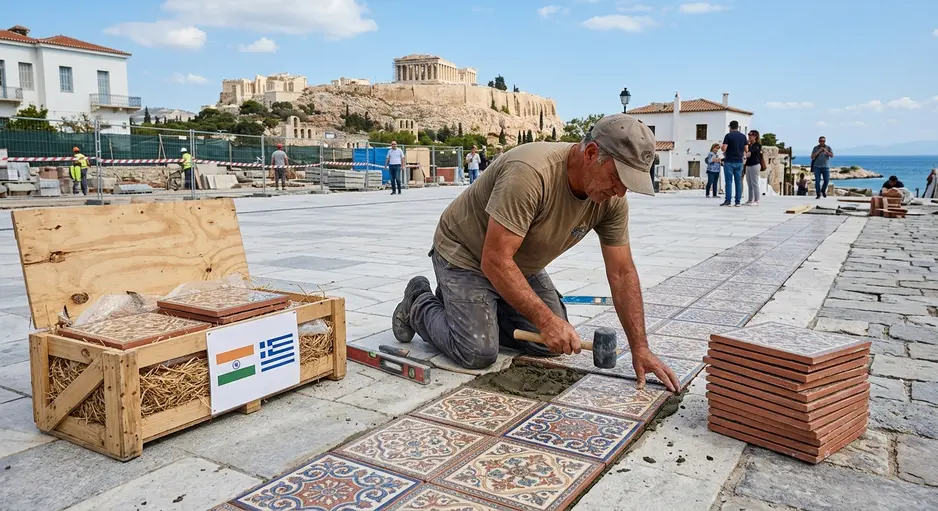
Water Absorption and Classification
Water absorption helps classify ceramic tile bodies. EN 14411 and ISO 13006 cover ceramic tile classifications, while the ISO 10545 series includes methods used to test key properties.
A low absorption result can support certain demanding uses, but it does not prove that a product is suitable for every exterior, wet, or commercial space. The complete technical profile matters.
Abrasion Resistance for Floors
Abrasion resistance indicates how a tile surface responds to wear. Glazed tiles and unglazed tiles may be assessed through different methods. Traffic levels also vary between private bedrooms, busy homes, hotel corridors, shops, and restaurants.
Do not assign a performance class based on appearance or finish alone. Request available test data and compare it with the project’s traffic and maintenance requirements.
Slip Resistance in Wet Areas
Polished finish tiles can create a bright, premium appearance, but they may need caution where water, oil, or dirt is likely to reach the floor. Bathrooms, entrances, kitchens, balconies, and hospitality spaces require careful surface selection.
A matte finish or textured surface may offer a more practical option in some settings. However, buyers must confirm the test method and required value with local professionals. No tile should be described as completely slip-proof.
Are Frost-Resistant Tiles Necessary in Greece?
Climate conditions vary across Greece. Frost-resistant tiles may be important in northern regions, mountainous locations, and exposed exterior areas affected by freeze-and-thaw cycles.
For these installations, request verified frost-resistance data. Proper drainage, substrate preparation, adhesive coverage, grout selection, waterproofing, and movement joints are equally important.
CE Marking and Declaration of Performance
Greek importers should confirm which EU construction-product requirements apply to the intended use. Relevant documentation may include CE marking and a Declaration of Performance where required.
Documents should identify the product, its intended use, the relevant harmonised standard, and declared performance information. Project-specific requirements should be checked with the Greek importer, architect, or compliance adviser before shipment.
Which Finishes, Formats, and Designs Should Buyers Choose?
Polished, Matte, Glazed, and Textured Surfaces
- Polished finish: Reflects more light and creates a refined look, but needs careful wet-area assessment.
- Matte finish: Offers a softer appearance and can suit many residential or commercial settings.
- Glazed surface: Supports varied colours and decorative effects. Floor use depends on verified abrasion performance.
- Textured finish: May provide added surface grip, though it can require a different cleaning routine.
Large Format Tiles and Installation
Large format tiles can reduce grout joints and create a clean, continuous appearance. They may also help interiors feel more open. Yet they need detailed installation planning.
The substrate must be suitably flat. Installers may require specialist handling tools, suitable adhesives, correct coverage, levelling systems, and planned movement joints. Pallets and crates must also be handled carefully on arrival.
Decorative Designs for Greek Interiors
Tile colours and patterns can complement Mediterranean, minimalist, natural-stone, concrete-look, or contemporary interiors. Buyers should review the current Brave Tiles catalogue before specifying any particular colour, pattern, finish, or size.
How Are Brave Tiles Exported from India to Greece?
Step-by-Step Bulk Ordering Process
- Share the required tile references, quantities, and applications.
- Confirm current availability and available technical data.
- Request and review physical samples.
- Approve colour, finish, shade, calibre, and packing.
- Review the quotation and selected Incoterm.
- Confirm production and inspection requirements.
- Check commercial and compliance documents.
- Arrange container loading and shipment.
- Inspect delivered cartons before installation begins.
Export Packaging
Professional export packaging helps reduce movement and transit damage. Depending on the order, packing may include protective cartons, corner protection, pallets, strapping, wrapping, and clear batch labels.
Container loading should consider moisture, weight distribution, and safe handling. When regulated wood packaging is used, buyers should confirm whether ISPM 15 requirements apply. No packing method can guarantee zero breakage.
International Shipping Logistics to Greece
Shipments may move from a suitable Indian export port to Greek ports such as Piraeus or Thessaloniki, depending on the freight plan. Full-container shipping is often considered for bulk orders, while consolidated cargo may suit smaller quantities.
Buyers should review container payload limits, gross weight, port charges, customs clearance, demurrage risk, and inland transport. Transit estimates are non-binding because vessel schedules, routes, transshipment, and port conditions can change.
Terms such as FOB, CFR, or CIF divide costs and responsibilities differently. Both parties should agree on the current Incoterm and named location in writing.
Which Import Documents May Be Needed?
- Commercial invoice
- Packing list
- Bill of lading
- Certificate of origin
- Insurance document, where applicable
- CE and Declaration of Performance documents, where required
- Available product test reports
- Applicable packaging declarations
Before calculating landed cost, Greek buyers should check current customs requirements, TARIC classification, and any applicable trade-remedy measures. Duty rates and import rules can change, so they should be verified for the shipment date.
Why Work with a Bulk Brave Tiles Supplier for Greece?
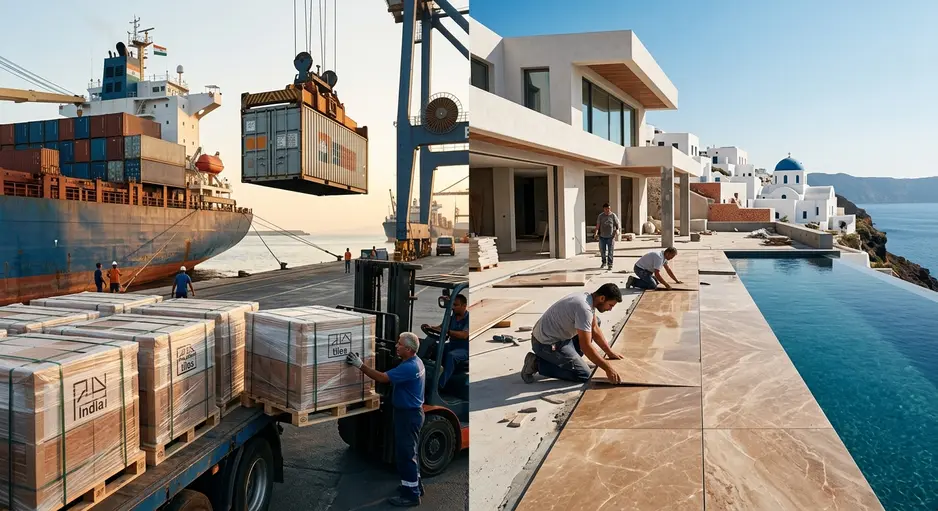
A bulk Brave Tiles exporter for Greece projects should help buyers organise product selection and order information before production. Clear communication can reduce avoidable issues involving quantities, applications, packing, and documentation.
When requesting a quotation from Alaska Surfaces, ask:
- What is the minimum order quantity?
- Can designs, finishes, or sizes be combined?
- Are physical samples available?
- What is the estimated production lead time?
- Which technical reports are available?
- How are shade and calibre managed?
- What are the carton and pallet weights?
- Which Incoterms can be quoted?
- How are inspection and transit claims handled?
Providing complete project details helps the supplier prepare a more relevant offer. Include the delivery port, intended application, quantity, finish, size, and documentation needs.
Brave Tiles Exporter to Greece
Plan Your Brave Tiles Order for Greece
The right tile order balances design, technical performance, compliance, installation, and logistics. Samples and verified product data should be approved before bulk production, especially for wet, outdoor, or high-traffic settings.
For buyers seeking a Brave Tiles exporter to Greece or a Brave Tiles supplier in Greece, clear project details are the best starting point. Contact Alaska Surfaces to request the current catalogue, technical information, packing details, and an export quotation for your residential or commercial project.
Frequently Asked Questions About Brave Tiles in Greece
1. Can I Order Brave Tiles in Bulk for a Greek Project?
Bulk ordering is subject to current product availability, minimum quantities, production planning, and shipping terms. Share the required area, application, size, finish, quantity, and delivery location when requesting a quote.
2. Are Brave Porcelain Tiles Suitable for Outdoor Areas?
Only select products with suitable water absorption, frost, strength, slip, and intended-use information. Correct drainage and installation are also essential.
3. Are Polished Brave Tiles Suitable for Bathrooms?
Polished floors may become slippery when wet. Check available slip-test data and consider matte or textured products for wet floor areas.
4. How Long Does Shipping from India to Greece Take?
Timing depends on production, vessel schedules, routing, transshipment, customs, and inland delivery. Request a dated estimate with the quotation rather than relying on a fixed general timeline.
5. What Information Is Needed for a Quote?
Provide the tile reference, size, finish, quantity, floor or wall use, residential or commercial application, delivery port or city, preferred Incoterm, and any inspection or compliance needs.