5 August, 2026
A rooftop terrace faces harsh conditions. Strong sun, heavy rain, temperature changes, furniture, and regular foot traffic can all damage the surface. Choosing a tile by color or appearance alone may lead to slippery floors, fading, cracks, or water problems.
The right solid tiles texture for rooftops should balance wet grip, water absorption, strength, heat performance, and easy maintenance. This guide explains how to compare outdoor tiles, review test data, and avoid common installation mistakes. It focuses on walkable terraces and rooftop flooring, not tiles used as the main covering on pitched roofs.
What Is Solid Tiles Texture for Rooftops?
What does “solid tile texture” mean?
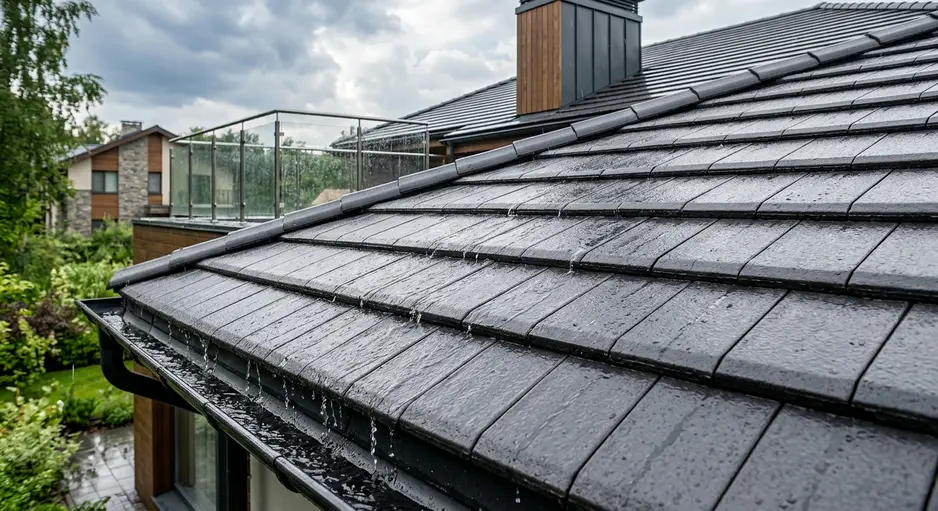
The term usually describes a dense tile body with a consistent surface texture suited to outdoor use. Depending on the supplier, “solid” may refer to ceramic, porcelain, full-body, homogeneous, or vitrified construction.
These terms are not interchangeable. Buyers should check the product data sheet rather than rely on a product name. Water absorption, wet-slip performance, breaking strength, and exterior-use approval are more useful than broad marketing terms.
Textured ceramic tiles vs smooth rooftop tiles
Textured ceramic tiles have raised, grainy, or structured surfaces that can provide better traction. They are useful on exposed terraces, walkways, and leisure areas. However, deeper textures may need more brushing because dust can collect in the surface.
Smooth tiles are easier to wipe, but polished products often become slippery when wet. They may also create glare in direct sunlight. For this reason, highly polished indoor tiles are generally a poor choice for rain-exposed rooftops.
Are rooftop tiles part of the waterproofing system?
Tiles protect and finish the walking surface, but they usually do not replace the roof’s waterproof membrane. A sound assembly also needs proper slopes, clear drains, suitable adhesives or supports, movement joints, and careful detailing around edges and penetrations.
Which Tile Properties Provide Weather Resistance?
How does water absorption affect rooftop tiles?
Low water absorption helps reduce moisture penetration, staining, and damage in freezing weather. ISO 10545-3 is widely used to determine how much water a ceramic tile absorbs.
Porcelain and vitrified rooftop tiles often have lower absorption than standard ceramic products. That does not make every product suitable for a roof. Ask for current test results for the exact design, size, and production range being considered.
Are textured rooftop tiles safe in heavy rain?
Texture can improve traction, but appearance alone does not prove that a tile is safe. Wet grip is affected by surface profile, footwear, contaminants, slope, drainage, and cleaning.
ANSI A326.3 provides a method for measuring the wet dynamic coefficient of friction of hard surface flooring. Local codes or project specifications may require other classifications. Review verified wet-slip data and test a sample under realistic conditions before approval.
No surface is completely slip-proof. Even anti-slip rooftop tiles can become unsafe when grease, algae, dust, or standing water is present.
Why do UV and heat resistance matter?
Long periods of sunlight can affect color and surface appearance. A documented UV-resistant tile surface is important where fading would create uneven areas. Thermal movement also matters because rooftops can heat and cool quickly.
Lighter colors often absorb less solar heat than dark colors, although actual performance depends on the product. If surface temperature is a major concern, request solar reflectance or Solar Reflectance Index data. The Cool Roof Rating Council and U.S. Department of Energy provide useful guidance on roof reflectance and heat gain.
What makes a tile frost-resistant?
Water trapped in a tile or installation layer can expand when it freezes. Repeated freeze-thaw cycles may cause cracks, spalling, or loose tiles.
In cold regions, select low water absorption tiles with documented frost testing. ISO 10545-12 and ASTM C1026 are recognized references. A tile should only be called frost-resistant when suitable laboratory results support that claim.
Strength, abrasion, and chemical resistance
Rooftops may carry planters, tables, maintenance equipment, and frequent pedestrian traffic. ISO 10545-4 covers breaking strength, while ISO 10545-7 relates to surface abrasion resistance for glazed tiles. Chemical and stain resistance also matter in polluted, coastal, hospitality, or food-service settings.
Best Solid Tile Texture for Outdoor Weather
Solid tiles texture vs matte finish tiles
Textured
- Wet grip: Higher potential grip
- Cleaning: May require more brushing
- Heat and glare: Depends mainly on color and reflectance
- Best application: Exposed terraces and walkways
Matte
- Wet grip: Moderate and specification-dependent
- Cleaning: Usually easier to maintain
- Heat and glare: Low glare
- Best application: Covered or moderately exposed spaces
Polished
- Wet grip: Often poor when wet
- Cleaning: Easy to wipe
- Heat and glare: May create strong glare
- Best application: Indoor areas
Structured or anti-skid
- Wet grip: Designed for outdoor traction
- Cleaning: More demanding
- Heat and glare: Depends on finish and color
- Best application: Pools, rainy climates, and commercial rooftops
Are rougher tiles always safer?
A rough surface may provide more traction, but deeper grooves can hold dirt and water. Very coarse finishes can also feel uncomfortable under bare feet around rooftop pools or relaxation areas.
Choose the surface according to use. Certified wet-slip results are more reliable than judging a tile by touch or appearance.
Ceramic, porcelain, or vitrified rooftop tiles?
Standard ceramic tiles can work outdoors when they are rated for the climate and application. Porcelain and vitrified products are typically denser and may offer lower absorption. Their strength can make them suitable for heavy-duty outdoor flooring.
Still, material type alone is not enough. Confirm exterior approval, wet grip, frost performance, strength, and the recommended installation method for each product.
How to Choose Rooftop Tiles for Your Climate
What is the best tile texture for outdoor weather conditions?
- Hot and sunny climates: Choose UV-stable finishes, lighter colors, and verified thermal-shock resistance under ISO 10545-9.
- Rainy or humid climates: Use anti-skid outdoor tiles with low absorption and a texture that supports safe drainage.
- Cold climates: Specify frost-resistant rooftop tiles, compatible adhesives, flexible joints, and reliable drainage.
- Coastal climates: Review salt and chemical resistance. Select easy-clean surfaces and corrosion-resistant accessories.
- High-traffic rooftops: Check abrasion resistance, breaking strength, maintenance needs, and replacement availability.
Residential terraces vs commercial rooftops
Rooftop tiles for residential terraces should feel comfortable, suit outdoor furniture, and remain easy to clean. Households may also prefer moderate textures that are suitable for children, pets, and bare feet.
Rooftop tiles for commercial buildings face heavier traffic and stricter maintenance demands. Restaurants, hotels, office terraces, and apartment amenities may also need accessibility reviews and compliance with local slip-resistance rules.
Rooftop tile buyer’s specification checklist
- Confirmed exterior-use rating
- Wet-slip test result and applicable classification
- Water absorption result
- Frost resistance for cold climates
- Breaking strength and abrasion rating
- UV and thermal-shock performance
- Chemical and stain resistance
- Thickness, caliber, shade range, and batch consistency
- Warranty and installation requirements
- Technical data sheets and physical samples
Installation Strategies That Prevent Rooftop Failure
How should anti-slip rooftop tiles be installed?
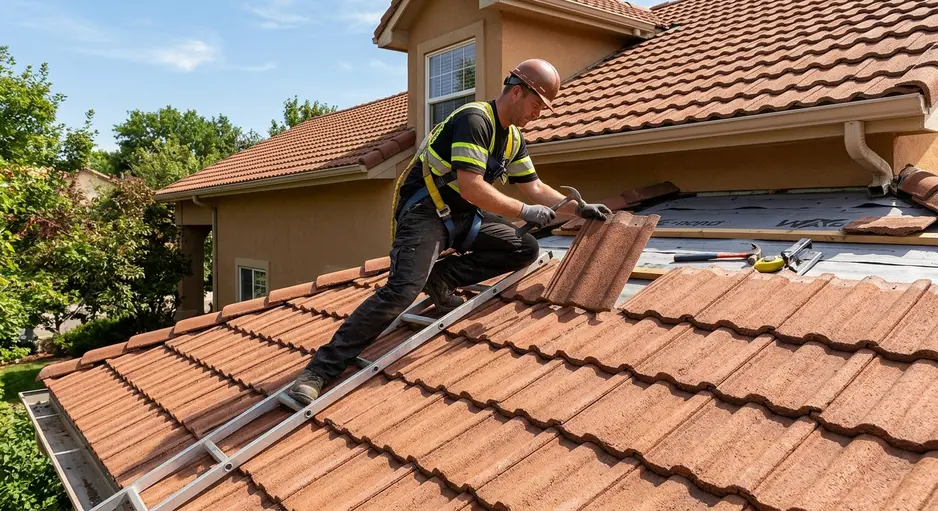
Begin with a structural review. The roof must support the tile system, bedding materials, furniture, planters, people, and expected service loads. Waterproofing should be tested before the finished surface is installed.
Create adequate slopes so water reaches the drains without pooling. Use exterior-rated adhesives, grout, drainage layers, or pedestal systems as specified. Follow local building codes and the instructions supplied for the complete installation system.
Why are movement joints necessary?
Daily heat and seasonal weather cause materials to expand and contract. Movement joints help reduce stress that could otherwise cause cracked grout, loose tiles, or surface failure.
Never bridge an existing structural or movement joint. Perimeters, large tiled areas, roof penetrations, and transitions require professional detailing.
Common rooftop tile installation mistakes
- Installing polished indoor tiles outside
- Choosing tiles without reviewing test reports
- Allowing inadequate slope or blocked drains
- Using insufficient adhesive coverage
- Leaving out movement joints
- Installing over a weak or dirty substrate
- Assuming grout will waterproof the roof
Actionable tip: Approve a sample installation and assess it under wet conditions before placing a large order.
Real-World Rooftop Tile Selection Examples
Rain-exposed residential terrace
A family terrace needs low-absorption, textured rooftop tiles with verified wet-slip performance. The finish should provide grip without being hard to clean or uncomfortable for regular household use.
Hotel or restaurant rooftop
A hospitality space requires stain resistance, strong wear performance, and traction in both dry and wet conditions. Buyers should also consider accessibility, local regulations, cleaning routines, and access to matching replacement stock.
Cold-climate commercial building
This project needs freeze-thaw tested tiles, low absorption, effective drainage, and flexible exterior installation materials. Snow and ice management methods should be compatible with both the tiles and grout.
Expert lesson from rooftop failures
Successful durable terrace flooring is not based on one feature. It comes from matching the tile, roof assembly, local climate, expected traffic, and maintenance plan.
Buying Rooftop Solid Tiles in Bulk
How do you evaluate a solid rooftop tile manufacturer?
Request product data sheets and relevant third-party test reports. Review production capacity, quality-control procedures, lead times, warranty terms, packaging standards, and shade consistency. Samples should represent the product and finish intended for the order.
What should international buyers ask an exporter?
- Which export markets are currently served?
- What are the minimum order and container quantities?
- How are tiles packed and secured on pallets?
- Which Incoterms and shipping documents are available?
- Can destination-country certification needs be met?
- How is transit damage handled?
- How are shade and caliber controlled across repeat orders?
Choosing an international rooftop tile supplier
Architects, distributors, and developers should compare test data and service capacity rather than price alone. When reviewing a solid rooftop tile manufacturer for bulk orders or a possible worldwide exporter, confirm every capability through current company documentation.
Contact Alaska Surfaces to request rooftop tile samples, technical data, available textures, format options, and bulk-order information for your market. Verify exterior-use ratings and project-specific performance before placing an order.
Get Started with Solid Tiles Texture for Rooftops
Choose Weather-Ready Rooftop Tiles with Confidence
The best solid tiles texture for rooftops combines reliable wet grip, low absorption, weather testing, strength, cleanability, and suitable design. Tile quality is only part of the solution. Waterproofing, drainage, movement joints, and correct installation are equally important.
Before ordering, request samples, test reports, installation guidance, and batch details. Contact Alaska Surfaces for current product information and a bulk quotation suited to your rooftop project and destination market.
Frequently Asked Questions
1. What is the best solid tiles texture for terrace flooring?
The best solid tiles texture for terrace flooring is usually textured or structured, with verified wet-slip resistance and low water absorption. It should also have the frost, UV, heat, strength, and wear performance required by the local climate.
2. Are anti-slip rooftop tiles completely slip-proof?
No. Water, grease, algae, dust, footwear, slope, and cleaning habits all affect traction. Anti-slip products can lower risk, but good drainage and regular maintenance remain essential.
3. Can solid ceramic rooftop tiles withstand frost?
They can only be considered suitable when their absorption level and documented freeze-thaw results meet project needs. Check ISO 10545-12, ASTM C1026, or another test required by local specifications.
4. Do outdoor solid texture tiles become hot in sunlight?
They can. Surface temperature depends on color, solar reflectance, climate, shade, and installation type. Lighter tiles often stay cooler than darker options, but product-specific reflectance data offers better guidance.
5. How thick should rooftop tiles be?
There is no universal thickness. The correct choice depends on tile size, installation method, structural loading, traffic, support spacing, and manufacturer recommendations. A structural or flooring professional should review demanding applications.