3 March, 2026
Choosing between floor tiles and wall tiles may seem simple, but the decision affects durability, maintenance, safety, and overall design appeal. Many homeowners select tiles purely based on appearance, only to face issues like slipping surfaces, cracked flooring, or tiles that don’t last.
Understanding how tiles differ in surface composition and texture helps ensure you select the right material for the right space. In this guide, we’ll break down everything you need to know so you can make a confident and long-lasting choice with premium solutions from Alaska Surfaces.
Are Wall and Floor Tiles Actually Different?
Yes and the differences are intentional.
Tiles made for vertical installations are designed to stay bonded to surfaces while prioritizing aesthetics and moisture resistance. Tiles built for walking surfaces must withstand pressure, friction, furniture weight, and daily wear.
Floor tiles are typically thicker, denser, and tested for durability using the PEI rating system developed by the Porcelain Enamel Institute. This rating helps determine how well a tile resists abrasion and heavy use.
Swapping tile types can cause real problems. Thin decorative tiles may crack under foot traffic, while heavy tiles installed on walls can strain adhesives and increase long-term failure risk. Understanding how each tile is engineered ensures better performance and safer interiors.
What Are Wall Tiles?
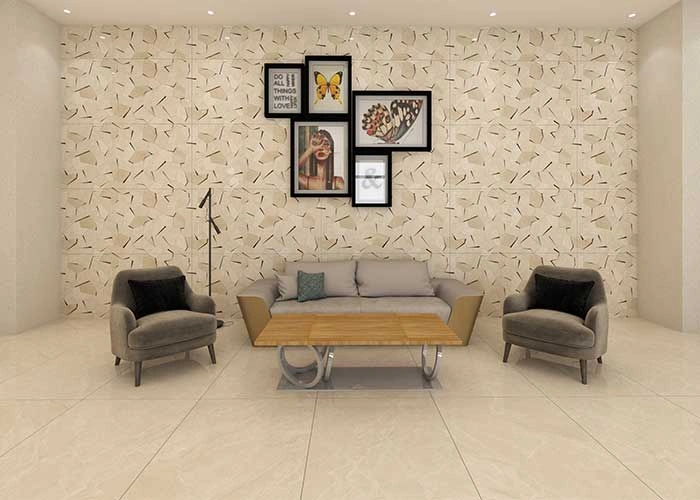
Wall tiles are specifically manufactured for vertical installation. Their primary role is decorative, protective, and moisture-resistant rather than structural.
They are usually:
-
Thinner and lighter than floor tiles
-
Designed with smoother finishes
-
Available in more decorative patterns and prints
-
Easier to cut and install
Common materials include ceramic, glazed porcelain, and glass. Since they don’t handle foot traffic, they don’t require high load-bearing strength.
What Are Floor Tiles?
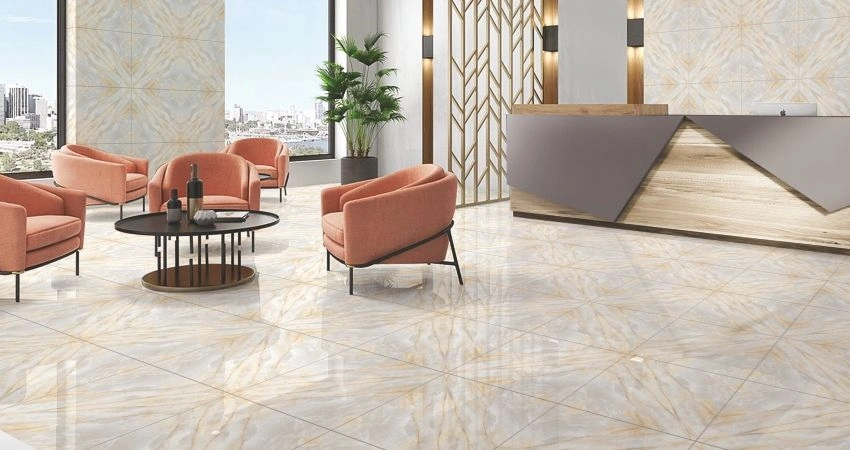
Floor tiles are engineered for durability and safety. Unlike wall tiles, they must withstand weight, foot traffic, furniture movement, and constant cleaning.
They are generally:
-
Thicker and denser
-
Designed with anti-slip surfaces
-
Strong enough for heavy loads
-
Less porous to resist moisture damage
Popular options include vitrified tiles, porcelain tiles, and natural stone tiles.
Because they carry physical stress, they must meet strict durability standards recommended by construction professionals and quality guidelines similar to those emphasized by Google for trustworthy content reliability matters both in building materials and information.
Core Differences Between Wall and Floor Tiles
Although wall and floor tiles may look similar, they differ in several critical ways.
1. Thickness and Strength
Floor tiles are thicker and stronger because they must bear weight. Wall tiles are lighter and thinner since they are only attached to vertical surfaces.
2. Surface Finish
Wall tiles often feature glossy or decorative finishes. Floor tiles prioritize durability and anti-slip properties over shine.
3. Texture
Texture plays a major role in safety. Floor tiles typically have textured or matte surfaces to prevent slipping. Wall tiles generally have smoother finishes for easier cleaning.
4. Water Absorption
Floor tiles, especially porcelain, have low water absorption rates. This makes them suitable for wet areas. Some wall tiles may not offer the same level of moisture resistance.
5. Installation Requirements
Floor installations require stronger adhesives and proper leveling. Wall installations are lighter and easier in comparison.
Understanding these differences ensures you choose the right type of tile for your application.
Best Surfaces for Wall Tiles
1. Glossy Surface
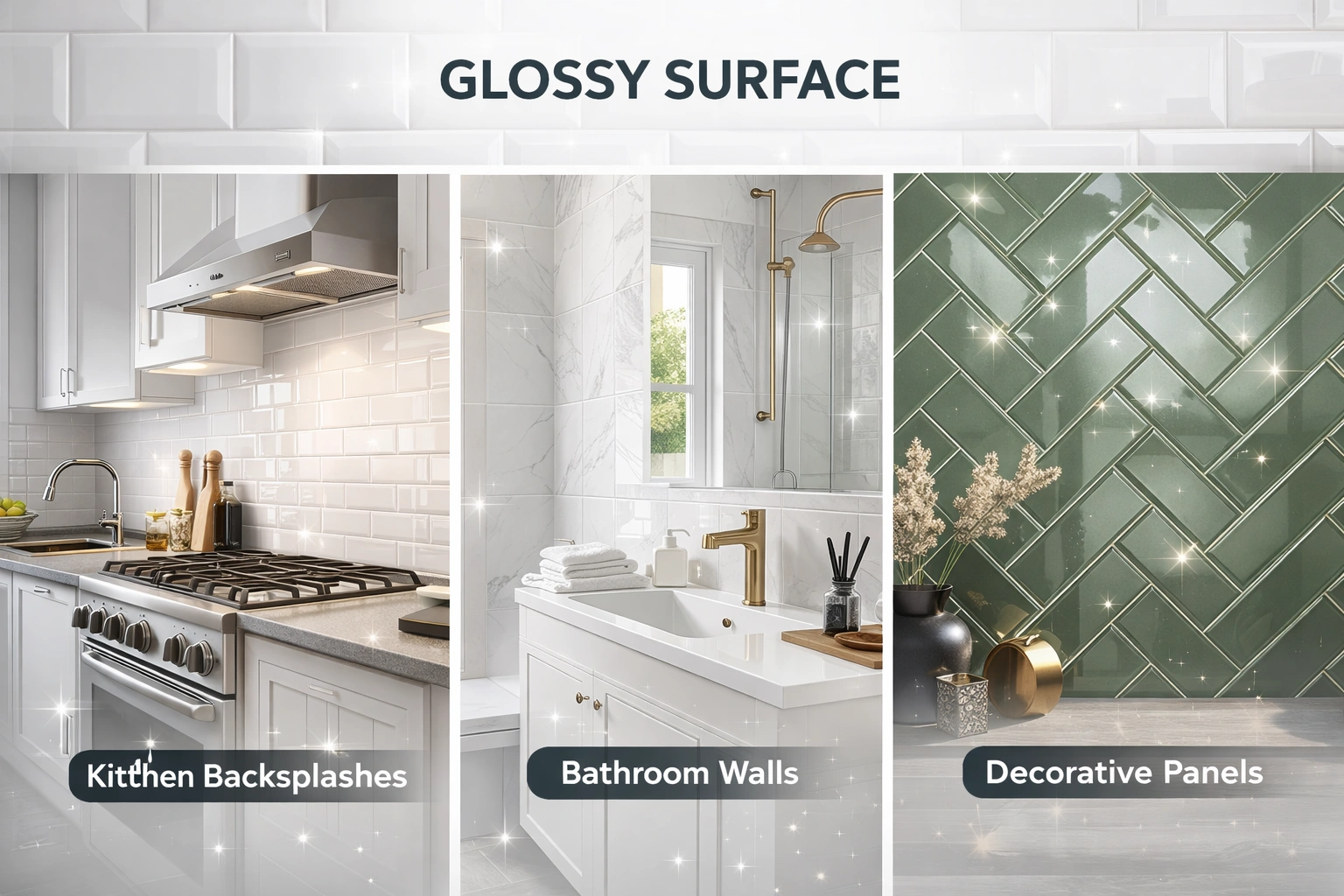
Glossy tiles are among the best surfaces for wall tiles in bathrooms and kitchens.
Benefits:
-
Reflect light and make spaces look larger
-
Easy to wipe and clean
-
Ideal for splash zones
-
Modern and elegant appearance
Best used for:
-
Kitchen backsplashes
-
Bathroom walls
-
Decorative panels
2. Satin or Semi-Gloss Finish
This finish balances shine and softness.
Benefits:
-
Less reflective than glossy tiles
-
Hides fingerprints and water marks
-
Works well in medium-traffic areas
Best used for:
-
Living room accent walls
-
Bedroom panels
-
Commercial interiors
3. Matte Surfaces
Matte tiles are becoming popular for feature walls.
Benefits:
-
Adds depth and character
-
Creates visual focal points
-
Available in stone, fabric, and geometric textures
Best for:
-
Feature walls
-
Living room accents
-
Rustic or natural interiors
They hide smudges better and give a softer appearance.
However, they are not always the best surfaces for wall tiles in kitchens or bathrooms because deep grooves collect dust and grease.
Best Texture for Wall Tiles
The best texture for wall tiles depends on design goals and maintenance preferences.
Smooth Texture
-
Easy to clean
-
Works well in kitchens and bathrooms
-
Ideal for modern interiors
Light Textured Tiles
-
Add depth to feature walls
-
Reduce glare from lighting
-
Provide visual interest without heavy maintenance
Patterned and 3D Tiles
-
Best for statement walls
-
Popular in living rooms and hotel-style interiors
-
Should be used sparingly to avoid visual clutter
Best Surfaces for Floor Tiles
The finish of floor tiles affects safety, cleaning effort, and long-term durability.
1. Matte Finish Tiles
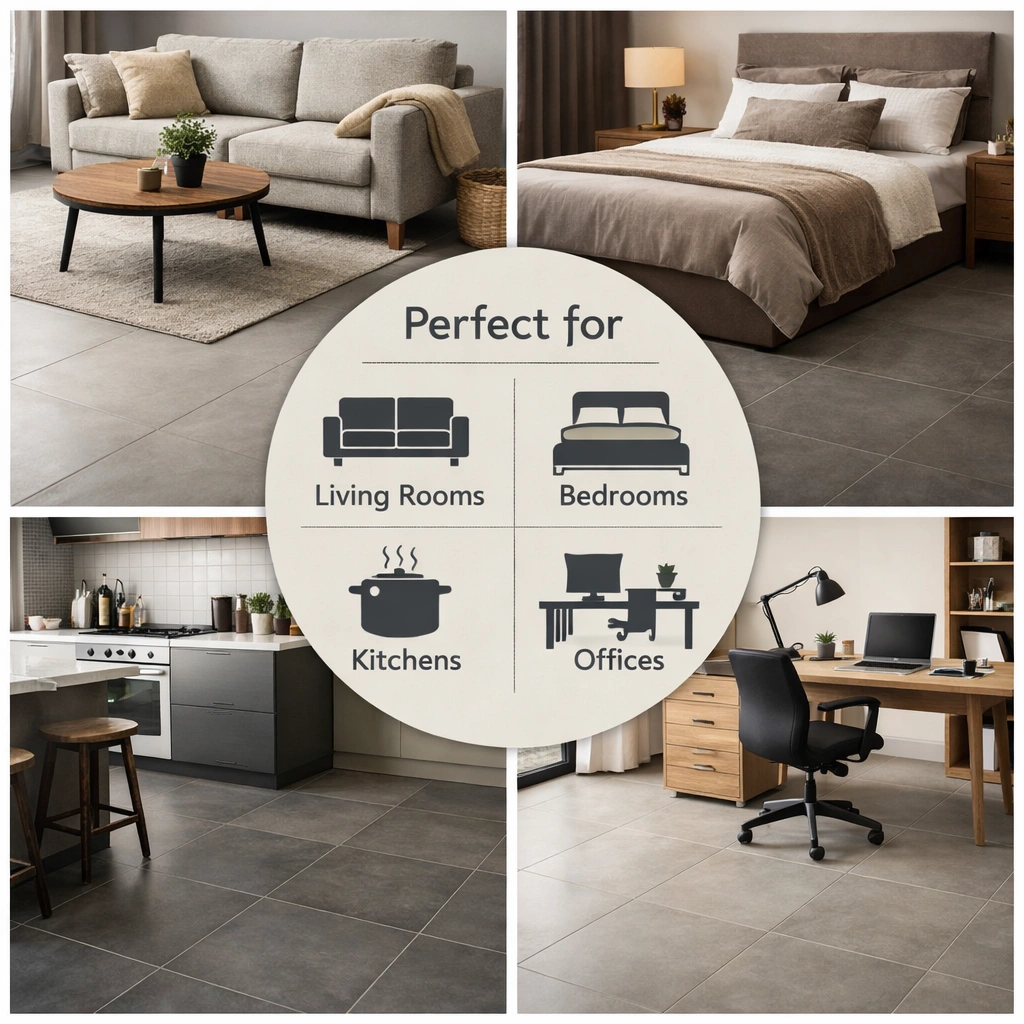
Matte tiles are considered among the best tiles for floor tiles in most homes.
Benefits:
-
Non-slippery surface
-
Natural look
-
Works well in both dry and wet areas
-
Hides scratches and dust
Best used for:
-
Living rooms
-
Bedrooms
-
Kitchens
-
Offices
2. Anti-Skid or Structured Finish
These tiles are specifically designed for wet zones.
Benefits:
-
High slip resistance
-
Better grip when wet
-
Ideal for safety-focused spaces
Best used for:
-
Bathrooms
-
Balconies
-
Outdoor areas
-
Poolside flooring
3. Polished Finish Floor Tiles
Polished tiles offer luxury and shine but require careful placement.
Benefits:
-
Elegant appearance
-
Reflective surface
-
Makes rooms appear larger
Best used for:
-
Living rooms
-
Hotel lobbies
-
Low-moisture interiors
Best Tiles for Floor Tiles Applications
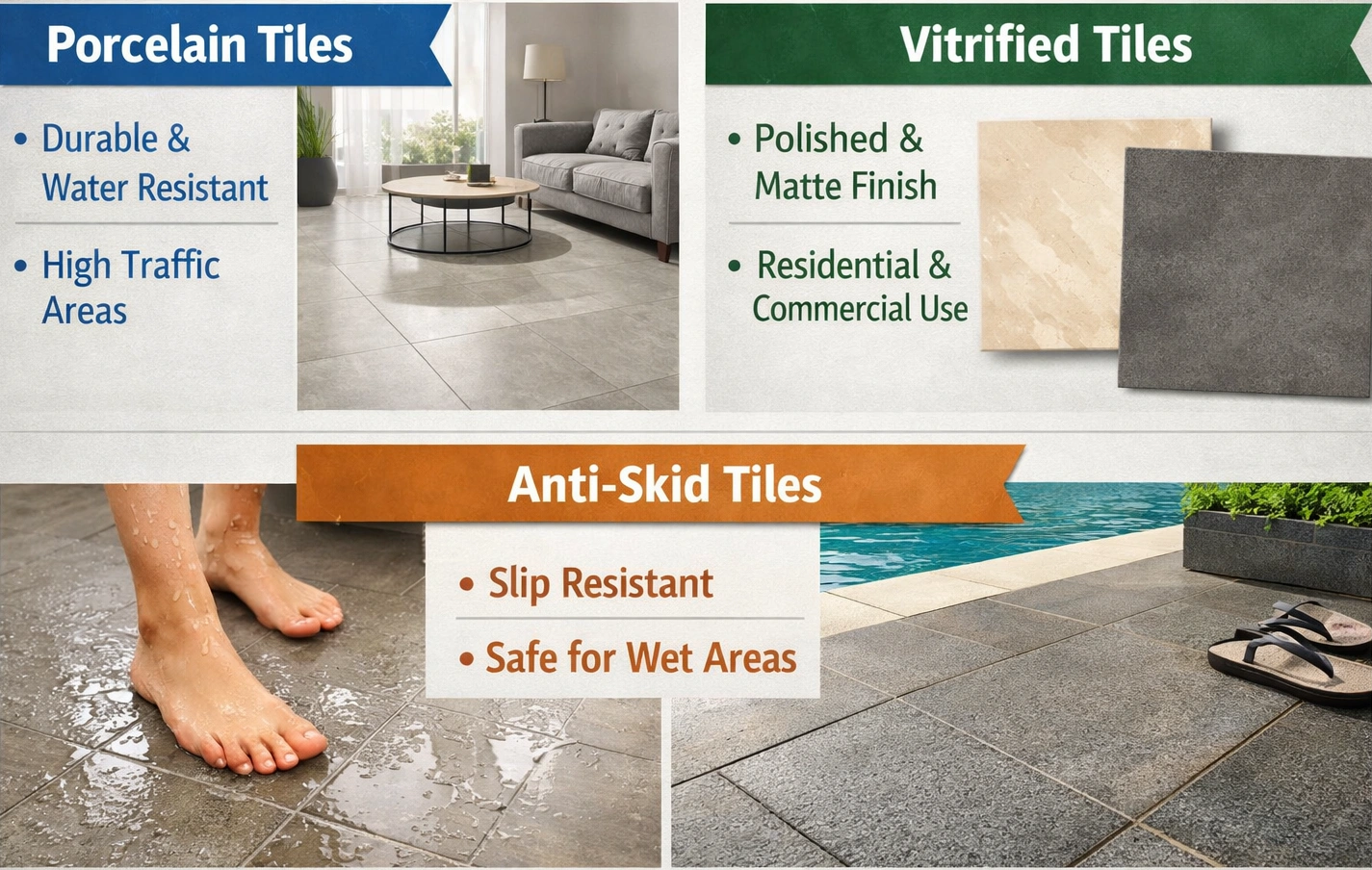
Selecting the best tiles for floor tiles use requires balancing durability, safety, and design.
Porcelain Tiles
-
Extremely durable
-
Water resistant
-
Suitable for high-traffic areas
Vitrified Tiles
-
Strong and dense
-
Available in polished or matte finishes
-
Ideal for residential and commercial flooring
Anti-Skid Tiles
-
Essential for bathrooms and outdoor areas
-
Reduce accident risk
-
Provide better grip in wet conditions
How to Choose Tiles Based on Room Type
-
Bathroom: Walls benefit from glossy finishes for easy cleaning. Floors require matte or anti-skid surfaces for safety.
-
Kitchen: Backsplashes look best with smooth, reflective surfaces. Kitchen floors should prioritize durability and stain resistance.
-
Living Room: Walls can feature decorative textures, while floors should focus on comfort and scratch resistance.
-
Outdoor Spaces: Always choose textured, weather-resistant tiles for both walls and floors.
Alaska Surfaces: Your Destination for Wall and Floor Tiles
If you’re looking for reliable solutions for both vertical and walking surfaces, Alaska Surfaces offers an extensive collection designed for performance as well as style.
Their range includes tiles suited for bathrooms, kitchens, living spaces, and outdoor areas, helping homeowners, designers, and contractors choose with confidence. With expert consultation and a wide selection of finishes, textures, and formats, finding the right tile becomes far easier.
Explore their collections to discover options tailored for both durability and design impact.
Find Wall And Floor Tile Design
Conclusion
Understanding the differences between floor tiles and wall tiles goes far beyond appearance. Surface finish determines cleaning effort and visual impact, while texture directly affects durability and safety.
By selecting tiles based on their intended function rather than just design, you ensure your space remains beautiful, practical, and long-lasting.
If you’re planning your next renovation, choosing the right tile from the start will always save time, money, and effort later.
People Also Ask
1. What is the difference between wall and floor tiles?
Wall tiles are lighter and decorative, while floor tiles are thicker, stronger, and designed for load-bearing and slip resistance.
2. Are glossy tiles good for floors?
Glossy tiles are not ideal for flooring because they can be slippery, especially in wet areas.
3. Which tiles are best for bathrooms?
Porcelain or vitrified tiles are best for floors, while ceramic or glazed porcelain works well for walls.
4. Can I use floor tiles on walls?
Yes, but ensure proper installation support because floor tiles are heavier.