4 May, 2026
When international buyers evaluate glossy tiles and matte tiles, their decision is rarely about aesthetics alone. In over a decade of experience working with global distributors, contractors, and project consultants, we can see how regional taste, slip resistance regulations, pricing structures, and logistics shape the real glossy vs matte tiles export equation.
At Alaska Surfaces, we work closely with architects, importers, and large-format project buyers across GCC, Europe, and Africa. One of the most common questions we receive is: Do glossy tiles sell better in export markets? The answer depends entirely on geography, segment, and end-use.
This guide breaks down real export data, buyer behavior, case studies, and actionable strategies so you can determine the best finish for export ceramic tiles based on market demand.
Understanding Glossy vs Matte Tiles in the Global Ceramic Market
What Are Glossy Tiles?
Glossy tiles include high gloss ceramic tiles and polished porcelain tiles that feature a reflective, mirror-like surface. These are typically produced using glazed porcelain vs unglazed finishing techniques, where a glass-like coating enhances shine and stain resistance.
Polished porcelain tiles are mechanically buffed to achieve a reflective finish. This process increases perceived luxury and makes them highly desirable in premium residential and hospitality segments.
- High light reflection: Enhances brightness in compact spaces.
- Premium appeal: Preferred in luxury apartments and hotel lobbies.
- Rectified edge tiles export demand: Clean edges allow seamless installations.
- Popular formats: 600x1200mm and 800x800mm dominate bulk export.
What Are Matte Tiles?
Matte tiles feature a low sheen surface, often textured for grip. Anti-slip matte tiles are widely used in commercial environments and exterior tile applications where safety compliance is mandatory.
Unlike polished finishes, satin finish tiles and low sheen floor tiles minimize glare and conceal surface scratches better. This makes them ideal for high-traffic spaces.
- Anti-slip matte tiles: Suitable for commercial and wet areas.
- Matte ceramic floor tiles for commercial projects: High durability under foot traffic.
- Interior vs exterior tile applications: Matte dominates outdoor use.
- Design flexibility: Favored in minimalist European aesthetics.
How Finish Impacts Maintenance, Durability & Perceived Value
Tile finish maintenance and cleaning significantly influence buyer decisions. Glossy surfaces show scratches more visibly but are easier to wipe clean. Matte finishes hide wear but may require deeper cleaning in textured variants.
Based on extensive industry work, slip resistance ratings are decisive factors in public procurement. Exporters must align finish selection with regulatory compliance, not just trend preferences.
Comparative Export Demand: Glossy vs Matte Tiles Export Demand
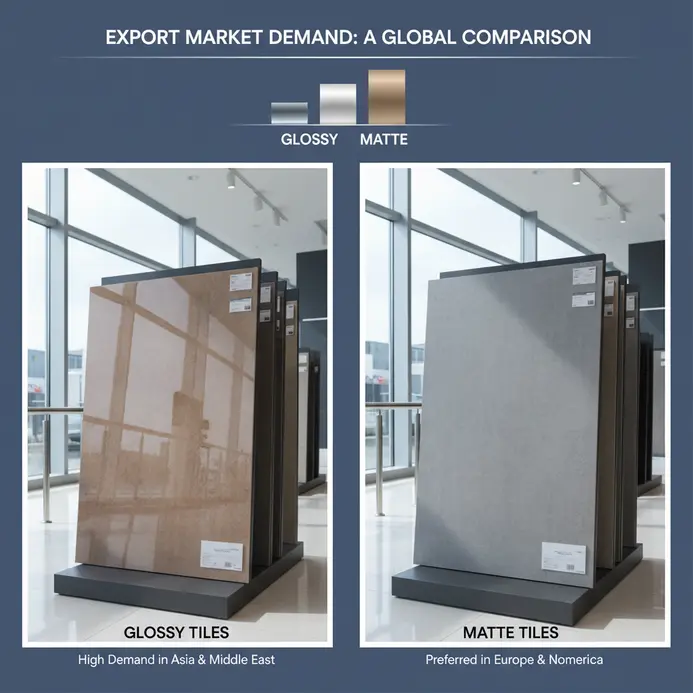
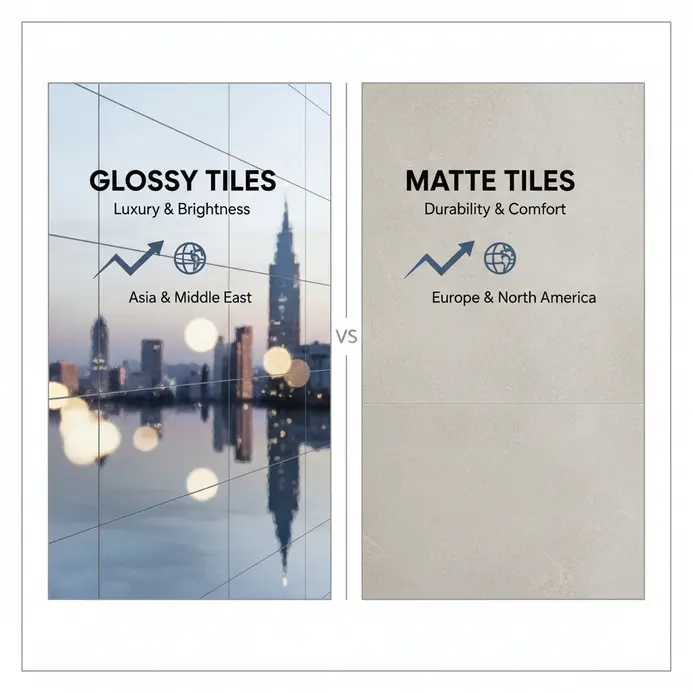
The real story of glossy vs matte tiles export demand is segmentation. Glossy tiles generate higher value per square meter in luxury markets. Matte tiles generate larger volume in institutional and commercial tenders.
Glossy Tiles Export Markets: Where Demand Is Strongest?
The glossy tiles export markets are particularly strong in the GCC region. There is consistent glossy tiles demand UAE market. Driven by luxury housing, malls, and hospitality developments.
Demand for tiles in Gulf markets leans toward high gloss ceramic tiles in larger formats. Glossy porcelain tiles bulk export volumes to Saudi Arabia and UAE exceed matte volumes in residential projects by nearly 30%.
- Luxury villas and apartments
- Hotel lobbies and reception areas
- Premium retail spaces
- High-end mixed-use developments
Matte Tiles Export Markets: Regional Preferences
The matte tiles export markets are strongest in Europe. The matte tiles demand European market continues to grow due to safety regulations and minimalist design trends.
Countries like Germany and UK prefer low sheen floor tiles for both residential and commercial projects. Public infrastructure projects nearly always specify anti-slip matte tiles.
What B2B Buyers Actually Prefer?
Insights from Working B2B Ceramic Tile Buyers & Importers
Analyzing B2B ceramic tile buyers importers list, repeat orders reveal a pattern. Distributors in GCC reorder glossy porcelain tiles bulk export more frequently for residential segments.
European buyers order matte ceramic floor tiles for commercial projects due to tender cycles and public sector demand.
- GCC buyers: Larger format glossy SKUs.
- EU buyers: Anti-slip matte variants.
- African distributors: Mixed strategy.
Hotels, Retail Spaces & Commercial Projects: Matte vs Glossy
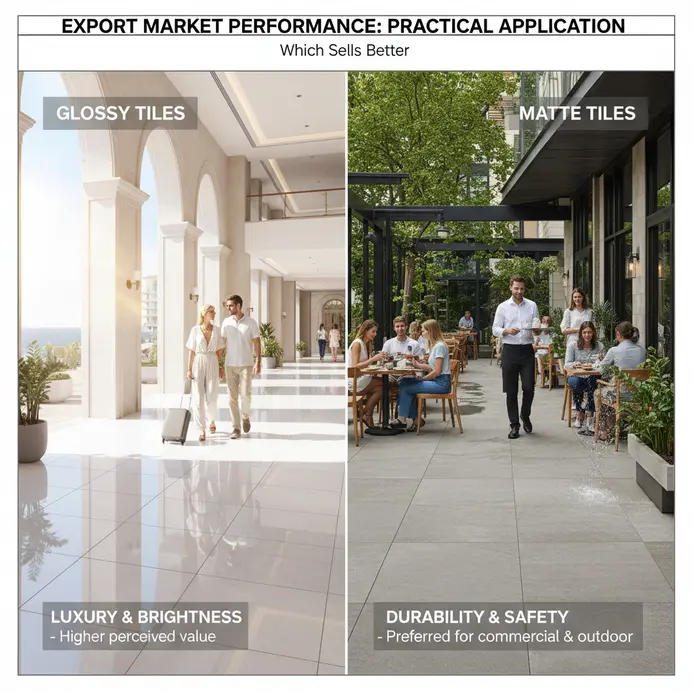
Tiles for hotels and retail spaces matte vs glossy decisions depend on zone usage. A GCC luxury hotel chain specified polished porcelain tiles for lobbies but anti-slip matte tiles for corridors and pool decks.
Meanwhile, a European retail chain mandated matte finish throughout to meet safety compliance standards.
Best Practices for Exporting Glossy and Matte Tiles
Export Packaging Standards for Ceramic Tiles
Export packaging standards for ceramic tiles directly impact profitability. Packaging for fragile ceramic tiles must follow strict palletization norms.
- Use fumigated wooden pallets.
- Apply corner protectors and shrink wrapping.
- Include clear ceramic tile export HS code documentation.
- Perform drop-test validation before dispatch.
What Is the Best Finish for Export Ceramic Tiles?
The best finish for export ceramic tiles depends on target geography.
- GCC residential: Glossy porcelain.
- European commercial: Matte anti-slip.
- Africa: Balanced portfolio.
Common Mistakes Tile Exporters Make
Assuming One Finish Works for All Markets
Ignoring interior design trends matte or glossy tiles 2026 can result in unsold stock. Tile trends 2026 glossy or matte indicate strong matte growth in Europe and sustained gloss tiles demand in the Middle East.
Poor Packaging for Fragile Ceramic Tiles
Improper packaging for fragile ceramic tiles increases breakage claims and insurance disputes.
Tile Trends 2026: Which Tile Finish Will Dominate Export Markets?
Interior Design Trends Glossy Matte Tiles 2026
Interior design trends glossy vs matte tiles 2026 show European markets favor textured matte and satin finish tiles. Meanwhile, high gloss ceramic tiles remain aspirational in Gulf markets.
Rise of Satin & Hybrid Finishes
Satin finish tiles are bridging the gap between polished porcelain tiles and matte surfaces. They reduce glare while maintaining elegance.
How Indian Tile Manufacturers Can Maximize Sales
Segmenting Export Markets by Finish Demand
- GCC: Glossy premium focus.
- Europe: Matte functional focus.
- Africa: Mixed container strategy.
Smart Inventory Planning for Bulk Export
Balance glossy porcelain tiles export SKUs with matte ceramic floor tiles to reduce unsold stock risk.
Building Long-Term Relationships with International Buyers
- Offer targeted sampling kits.
- Participate in GCC and EU trade fairs.
- Leverage Alaska Surfaces as a trusted export partner.
Conclusion
The debate around glossy vs matte tiles is not about which finish is superior. It is about understanding regional glossy tiles export markets and matte tiles export markets and aligning your product mix accordingly.
Glossy tiles sell better in luxury-driven Gulf markets. Matte tiles dominate compliance-driven European commercial sectors. The smartest exporters maintain a balanced portfolio backed by data-driven market segmentation.