9 September, 2026
Textured tiles can turn a plain wall into a strong design feature. They add depth, movement, and a changing light and shadow effect that flat surfaces cannot always achieve. Two popular options are 3D Tech tiles and Carve Tiles, but they create very different visual experiences.
In general, 3D Tech surfaces focus on controlled patterns and refined dimensional effects. Carved surfaces tend to feature deeper grooves and a more sculptural look. However, these names may describe specific collections rather than universal tile standards. The better choice depends on your design goals, lighting, maintenance needs, installation area, and the technical rating of the selected product.
3D Tech vs Carve Tiles: Quick Comparison
Overall Appearance
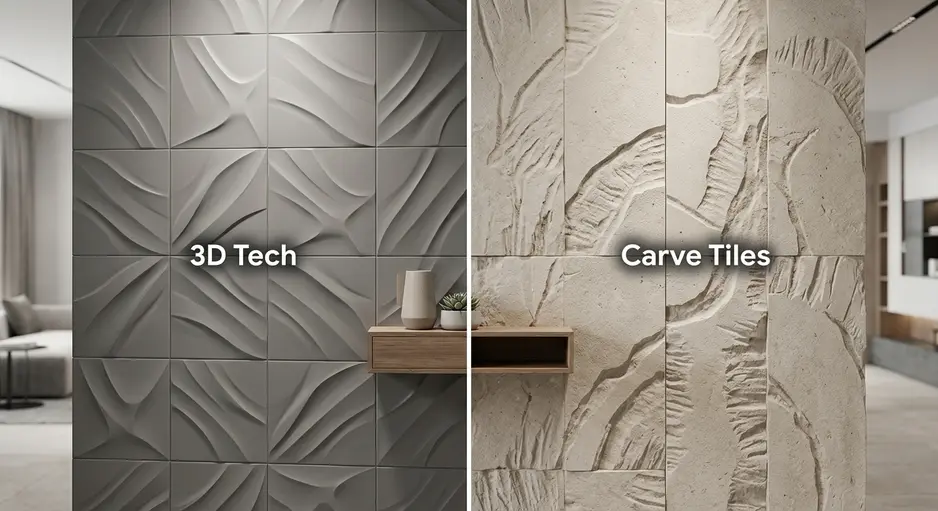
3D Tech: Clean, coordinated, and modern, with a controlled three-dimensional surface effect.
Carve: Sculpted and tactile, with grooves or recesses that give the wall a crafted character.
Pattern and Light
3D Tech: High-definition patterning often produces refined highlights and consistent visual rhythm.
Carve: Greater texture depth can create stronger shadows, especially under directional lighting.
Maintenance and Application
3D Tech: Cleaning needs vary, but shallower relief may be easier to reach in busy interiors.
Carve: Deep recesses can collect more dust and may need extra attention. These surfaces often work best on statement walls and lower-touch areas.
Always review full-size samples before ordering. Screen images may not show the true relief, finish, color variation, or way the surface reacts to light.
What Are 3D Tech Tiles and Carve Tiles?
3D Tech Tiles and Digital Surface Technology
3D Tech tiles generally use a technology-led approach to dimensional design. Depending on the collection, the effect may come from physical relief, an embossed finish, coordinated graphics, surface treatments, or a mix of these methods.
This controlled approach can support clear pattern placement and repeatable designs. It is often well suited to contemporary wall design, where clean lines and pattern consistency matter. Some 3D Tech tile designs may also use marble-inspired texture or stone-inspired texture to add depth without looking heavily sculpted.
The result can range from subtle surface movement to a more noticeable decorative effect. For that reason, buyers should examine the actual product rather than assuming every tile marked “3D” has the same level of relief.
Carve Tiles and Deep Carved Texture
Carve Tiles are usually chosen for their stronger tactile surface. Grooves, ridges, and recessed details give them an architectural look. When light moves across the wall, the raised and lowered areas create bold shadow lines.
Carve tile designs may feel hand-worked, natural, or stone-like. Their visual impact makes them a common choice for accent wall applications, including reception areas, dining rooms, bedroom walls, and hospitality interiors.
Deep carved texture can also make cut edges, corners, joints, and outlets more visible. Installation details therefore play an important role in the final appearance.
Why Product Labels Need Verification
Terms such as “3D,” “carved,” and “textured” often describe appearance rather than a standard level of performance. Before specifying either surface, confirm:
- The tile material and body
- The glaze or surface finish
- Whether it is rated for walls or floors
- Indoor, outdoor, dry, or wet-area approval
- Water absorption and stain resistance
- Cleaning, sealing, and installation instructions
How Do Their Texture and Visual Effects Differ?
High-Definition Patterning vs Deep Relief
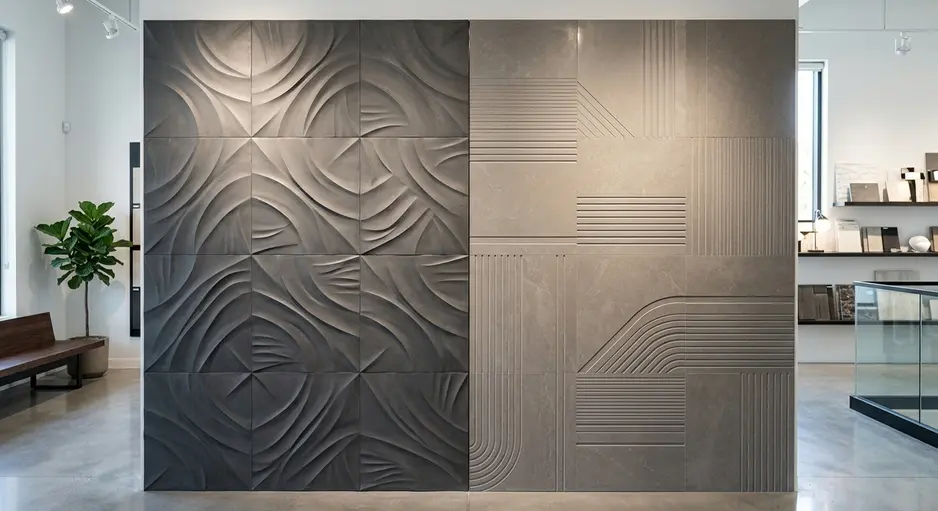
Decorative 3D tiles often create a precise and engineered look. Repeated motifs can form a smooth visual rhythm across a large surface. This is useful when a project calls for order, balance, and a consistent finish.
Carved surface tiles place more focus on physical relief. Their grooves can appear organic and dramatic, even when the pattern itself repeats. They are often used as a focal point rather than across every wall in a room.
Scale also matters. A bold pattern may look balanced on a tall lobby wall but feel busy in a narrow room. View several pieces together from the distance at which people will normally see the installation.
How Lighting Changes a Textured Surface
Lighting can make the same tile look subtle or dramatic. Grazing light, placed close to the surface, highlights ridges and creates deeper shadows. Soft ambient lighting reduces contrast and gives the texture a calmer appearance.
- Test samples under the room’s planned lighting.
- Compare warm and cool light sources.
- Check the wall at different times of day.
- Consider the direction of nearby windows.
- Do not rely only on bright, front-lit displays.
For marble-inspired or stone-inspired surfaces, check how graphics move from one tile to the next. Large installations need careful planning to prevent obvious repeats or awkward pattern transitions.
Which Surface Is More Durable?
Surface Style Does Not Decide Durability
When comparing 3D Tech Tiles vs Carve Tiles for durability, the design label alone is not enough. A deeper or smoother texture does not automatically tell you how well the tile will perform over time.
Durability depends on the tile body, finish, water absorption, abrasion resistance, stain resistance, chemical resistance, edge profile, and approved application. Substrate preparation, adhesive coverage, movement joints, and installer skill also affect long-term results.
Use the technical data for the exact product being considered. Do not assume that all tiles within a decorative category share the same ratings.
Can Textured Tiles Be Used on Floors?
Only use a textured tile on a floor when the specific product is approved for flooring. Many decorative 3D tiles are designed for walls and should not be treated as floor products.
Deep relief can affect comfort, cleanability, rolling loads, and accessibility. Slip resistance must also be checked using the applicable product test data. For commercial floors, consider foot traffic, carts, cleaning equipment, and local building requirements.
Maintenance Requirements
Any tactile surface can hold dust in its grooves. The amount of work required will depend on the relief depth, finish, room conditions, and cleaning frequency.
- Remove loose dust with a soft microfiber cloth.
- Use a soft brush for deeper recesses if permitted.
- Avoid abrasive pads unless the manufacturer approves them.
- Test cleaning products on a hidden area first.
- Follow product guidance for grout and sealing.
In kitchens, entrances, or other busy areas, consider exposure to grease, moisture, fingerprints, and frequent contact before choosing a heavily textured surface.
Where Should Each Surface Be Used?
3D Tech Tiles for Modern Interiors
3D Tech Tiles for modern interiors can work well where a refined, coordinated appearance is needed. Possible uses, subject to product ratings, include media walls, contemporary kitchens, hotel lobbies, executive offices, retail displays, and restaurant interiors.
Controlled patterning can be helpful across broad surfaces and repeated commercial locations. It may also make it easier to maintain a shared design language across several rooms.
Carve Tiles for Feature Walls
Carve Tiles for feature walls are well suited to spaces that need a strong focal point. Reception backdrops, dining-room walls, bedroom headboard walls, spa interiors, boutique displays, and statement niches can all benefit from a sculptural finish.
Give the design enough open space to be seen clearly. Furniture, signs, shelves, and fixtures may hide the texture or make the wall feel crowded. Purposeful lighting can help the carved details remain visible.
Textured Tiles in Commercial Spaces
Both 3D Tech and Carve Tiles for commercial spaces require planning beyond appearance. Project teams should review cleaning frequency, public contact, impact risk, replacement stock, batch consistency, installation details, and any required technical documentation.
For example, a hotel reception wall may benefit from carved texture under concealed grazing light. A multi-location retail project may place greater value on repeatable pattern alignment and a controlled dimensional finish.
How Do You Choose Between Them?
Choose 3D Tech Tiles If You Want
- A refined and technology-led appearance
- Controlled pattern consistency
- Contemporary interior design aesthetics
- Subtle or moderate dimensionality
- Coordinated graphics and surface effects
- A design suited to larger repeated areas
Choose Carve Tiles If You Want
- A sculptural feature wall
- Visible grooves and deeper relief
- Strong light and shadow contrast
- A dramatic focal point
- Stone-like or handcrafted character
- A tactile finish for a lower-touch area
Five Questions to Ask Before Ordering
- Is the product approved for the intended wall, floor, wet, or outdoor location?
- How will the texture look under the room’s actual lighting?
- Can the surface be cleaned easily in that setting?
- How will the installer handle corners, cuts, outlets, and alignment?
- Can extra stock be retained for future repairs?
Order samples and review several pieces together. This helps you assess shade, pattern, finish, and texture variation before making a final decision.
Expert Tips for Specifying Textured Tiles
Build a Full-Size Mock-Up
A single sample cannot show how a complete wall will look. Build a mock-up with several tiles, the proposed grout color, joint width, and lighting. Include a corner, cut, trim, or outlet detail where possible.
Inspect the mock-up from close range and from the normal viewing distance. This can reveal uneven shadow lines, repeated graphics, difficult joints, or cleaning concerns before installation begins.
Plan Around the Surface Relief
Use an installer who has experience with textured carving tiles. The substrate must be prepared correctly, and pieces should be dry-laid to review pattern transitions. External corners and trim profiles also need early planning.
During construction, protect the raised areas from impact and building dust. Follow the product instructions for adhesive, grout, coverage, movement joints, and curing time.
Consider Lifetime Value
The most attractive option is not always the most practical one. Compare the purchase cost with installation complexity, lighting needs, cleaning labor, replacement availability, and expected service conditions. This gives a clearer view of lifetime value.
Which Textured Surface Should You Select?
There is no universal winner in the 3D Tech vs Carve Tiles comparison. Choose 3D Tech when precision, pattern control, and a clean modern effect are most important. Choose Carve Tiles when you want sculptural depth, tactile character, and stronger shadows.
Performance must always be confirmed through the technical specifications for the exact product. Explore the Alaska Surfaces collections, request samples, and compare both options under your project’s actual lighting. A thoughtful sample review and a well-planned mock-up will help you select a surface that looks right and works well over time.
Frequently Asked Questions
1. Are 3D Tech Tiles Better Than Carve Tiles?
They are better when you want precise patterns, controlled dimensional effects, and a modern look. Carve Tiles may be better when deep texture and dramatic shadows are the main goals. The right choice depends on the location, lighting, maintenance needs, and verified product ratings.
2. Which Tiles Are Best for Textured Wall Designs?
The best tiles for textured wall designs balance visual depth with practical needs. Consider lighting, room size, cleaning access, pattern scale, installation details, and environmental exposure. Always confirm that the selected tile is approved for the intended setting.
3. Are Carve Tiles Difficult to Clean?
They are not always difficult to clean, but deep grooves may need more attention than a flat surface. Dust can settle in recesses. Cleaning effort depends on texture depth, finish, location, and the care instructions provided for that product.
4. Can 3D Textured Tiles Be Used in Bathrooms?
They may be used when the specific tile is approved for the intended bathroom zone. Confirm water exposure, substrate preparation, grout, sealing, ventilation, and cleaning requirements. A product suitable for a dry vanity wall may not be suitable inside a shower.
5. Do 3D Tiles Make a Small Room Look Smaller?
Not necessarily. Light colors, shallow relief, simple patterns, and balanced lighting can add depth without overwhelming a compact room. Deep, high-contrast textures are often more effective when limited to one focal wall.