3 February, 2026

Choosing the right wall tiles and floor tiles can completely change how a space looks and feels. When mixed thoughtfully, tiles add depth, balance, and character to interiors. However, combining different tiles without a plan can make rooms feel cluttered or mismatched. This expert guide explains how to mix wall tiles and floor tiles correctly, helping beginners and homeowners make confident, stylish choices for every space.
Understanding the Difference Between Wall Tiles and Floor Tiles
Before mixing tiles, it’s important to understand why wall and floor tiles are designed differently.
Material Strength and Durability
-
Vertical surfaces use lighter materials that are easy to install.
-
Flooring requires stronger options that can handle constant movement.
-
Ceramic tile works well on walls and light-use areas.
-
Porcelain tiles are denser, making them ideal for floors, outdoor spaces, and high-traffic zones.
Finish, Texture, and Slip Resistance
-
Glossy finishes are more common on vertical surfaces.
-
Matte and textured finishes improve grip underfoot.
-
Slip resistance is essential for bathroom tile, kitchen tile, and outdoor tile areas.
How to Mix Wall Tiles and Floor Tiles for a Balanced Look
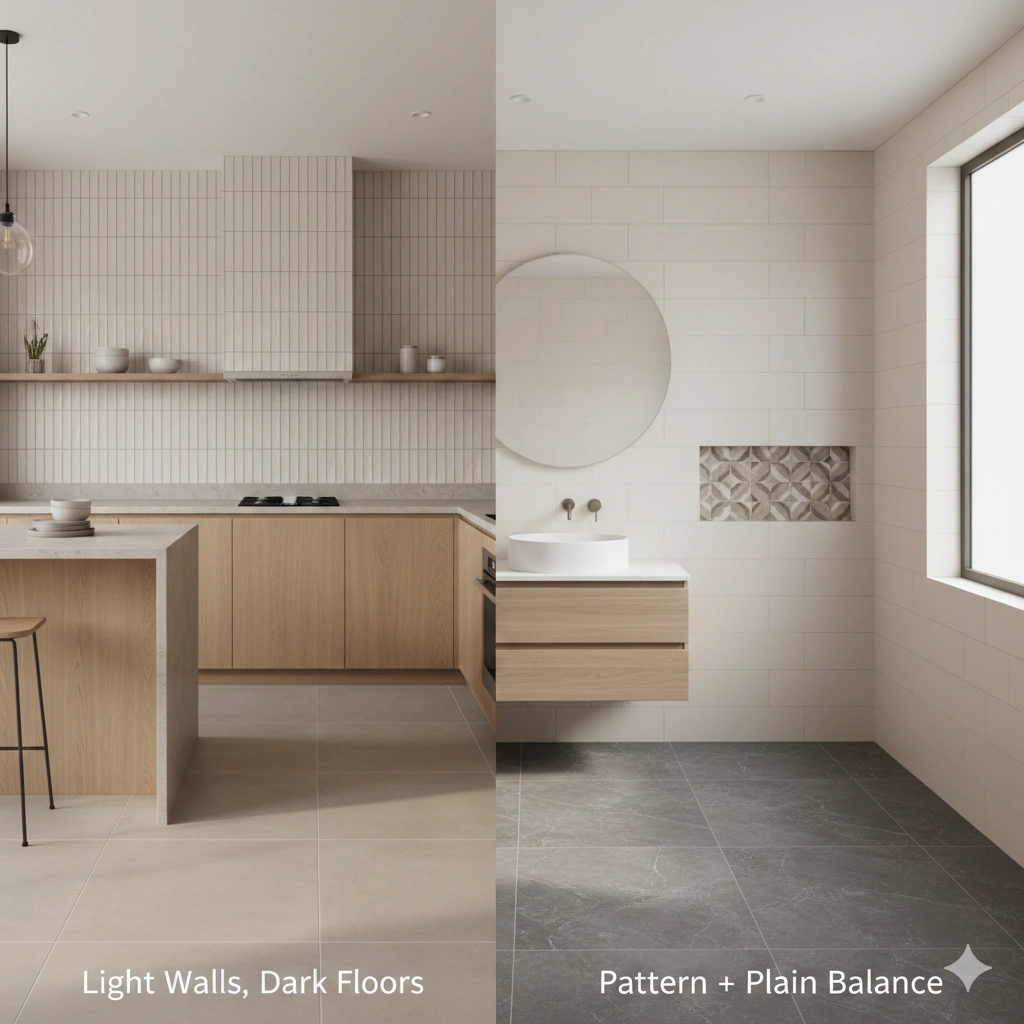
Professional designers follow a few simple principles to ensure harmony.
Coordinate Colors Without Over-Matching
-
Stick to the same color family instead of exact shades.
-
Light surfaces above with deeper tones below feel grounded.
-
Neutral floors allow bold wall designs to stand out.
Combine Patterns with Simplicity
-
Use patterned tiles on one surface only.
-
Keep the opposite surface plain or lightly textured.
-
This approach works well in bathroom tile and kitchen tile layouts.
Play with Tile Sizes and Layouts
-
Large-format tiles make rooms feel more open.
-
Smaller wall tiles add detail and visual interest.
-
Vertical wall layouts enhance height, while horizontal layouts widen rooms.
Best Wall and Floor Tile Combinations by Material
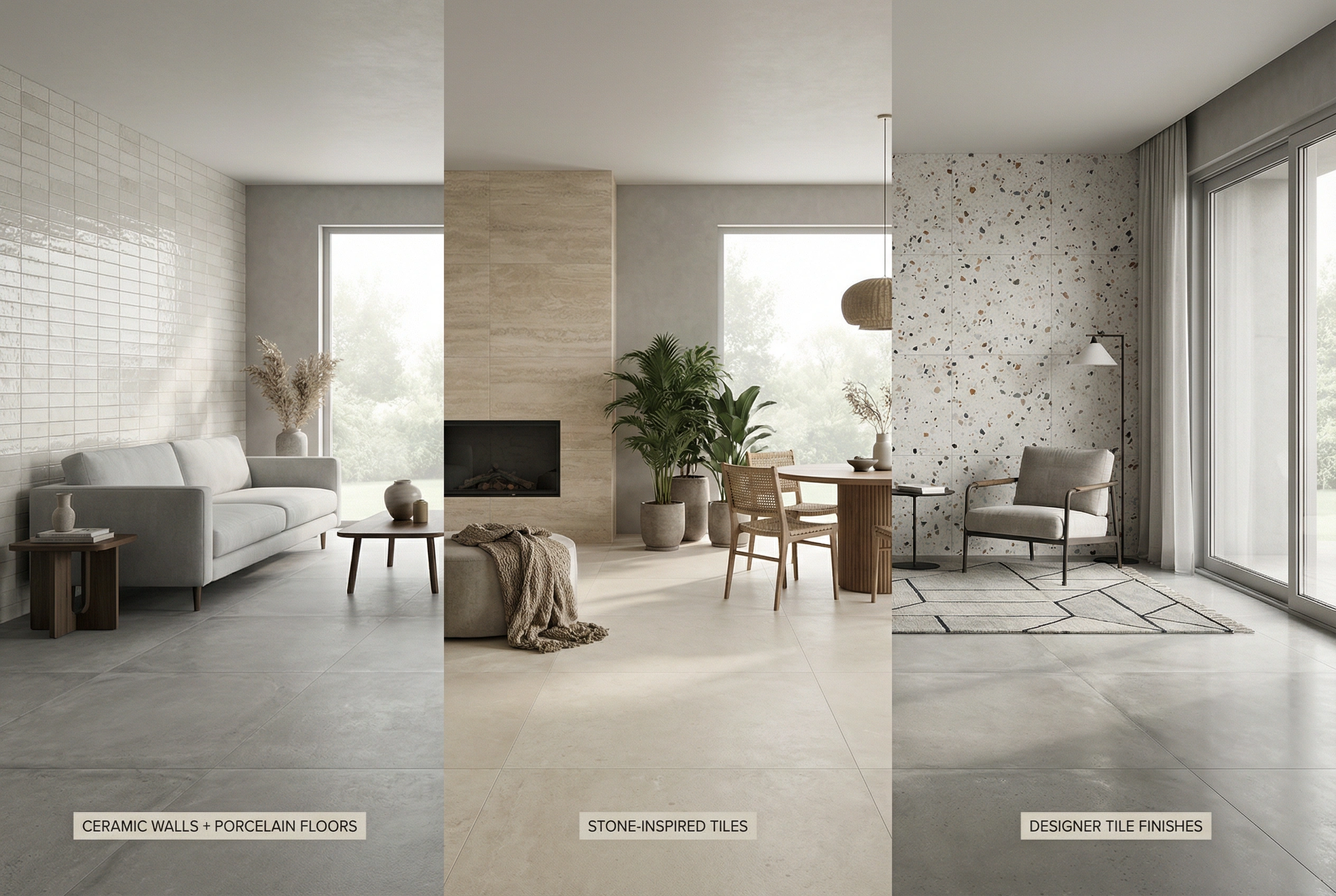
Ceramic Tile and Porcelain Tiles Pairings
-
Ceramic tile suits walls in bedrooms and living rooms.
-
Porcelain tiles perform better on floors due to strength and low water absorption.
-
Mixing these creates a practical and stylish balance.
Natural and Stone-Inspired Tiles
-
Travertine tile adds warmth and texture.
-
Limestone tiles bring soft, natural elegance.
-
Stone tile designs work well for living room tile and outdoor tile applications.
Designer and Trend-Based Tile Options
-
Terrazzo tiles add playful patterns to modern interiors.
-
Concrete tiles offer an industrial, minimalist feel.
-
Marble look tile provides luxury without high maintenance.
-
Wood effect tiles bring warmth while staying durable.
Room-by-Room Guide to Mixing Wall Tiles and Floor Tiles
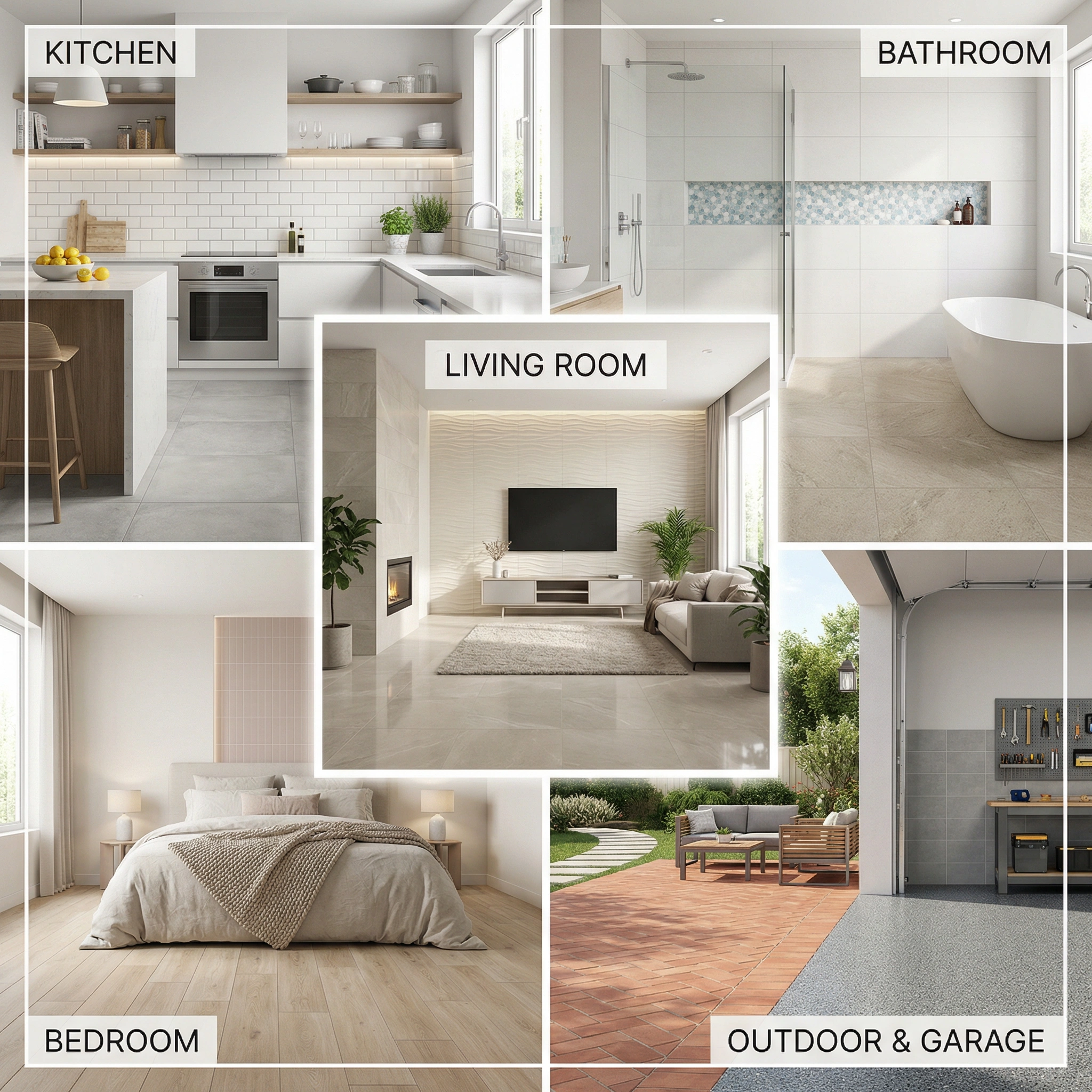
Kitchen Tile Styling Ideas
-
Use easy-to-clean wall tiles for backsplashes.
-
Choose durable flooring that handles spills easily.
-
Subway tiles paired with neutral floors remain timeless.
Bathroom Tile Combinations
-
Moisture-resistant wall tiles protect surfaces.
-
Anti-slip flooring improves safety.
-
Mosaic tile accents work beautifully in shower areas.
Living Room Tile Design
-
Seamless flooring creates a spacious feel.
-
Feature walls with 3D tiles add depth.
-
Stone or concrete finishes suit modern living rooms.
Bedroom Tile Combinations
-
Soft tones and wood effect tiles create warmth.
-
Minimal wall tile designs maintain a calm atmosphere.
-
Matte finishes feel cozy underfoot.
Outdoor Tile and Garage Tile Applications
-
Outdoor tiles should resist weather and temperature changes.
-
Quarry tiles and terracotta tiles suit patios and walkways.
-
Garage tiles need high durability and stain resistance.
Popular Tile Styles and Where to Use Them
-
Subway tiles: Kitchens and bathrooms
-
Mosaic tile: Shower walls and accents
-
3D tiles: Feature walls in living rooms
-
Terracotta tiles: Outdoor and rustic interiors
-
Quarry tiles: Garages and heavy-use areas
Common Mistakes to Avoid When Mixing Wall and Floor Tiles
-
Using too many bold patterns together
-
Ignoring floor safety and slip resistance
-
Choosing grout colors that clash with tile tones
Comparison Table – Wall Tiles vs Floor Tiles
| Feature | Wall Tiles | Floor Tiles | Recommended Applications |
|---|---|---|---|
| Thickness | Thinner | Thicker | Walls vs high-traffic floors |
| Finish | Glossy or decorative | Matte or textured | Bathroom tile, kitchen tile |
| Durability | Light-duty | Heavy-duty | Living room, outdoor tile |
| Slip Resistance | Not required | Essential | Bathrooms, garages |
Choosing Tiles That Perform Well Over Time
-
Select low-maintenance surfaces for busy areas.
-
Consider durability for living room tile and garage tile zones.
-
Moisture resistance is essential for bathroom tile and outdoor tile use.
How Alaska Surfaces Helps You Mix Wall and Floor Tiles Perfectly
Alaska Surfaces offers a wide range of ceramic and porcelain tile solutions designed for seamless coordination. Their collections feature carefully curated textures, finishes, and formats that allow effortless pairing across spaces. From elegant living room tile designs to durable outdoor tile applications, Alaska Surfaces combines aesthetics with performance. With advanced manufacturing and designer-led concepts, the brand supports both residential and commercial projects. Their tiles ensure consistency, quality, and long-term reliability across all surfaces.
Latest Wall And Floor Tile Design
Conclusion - Final Thoughts on Mixing Wall Tiles and Floor Tiles
Mixing wall tiles and floor tiles is both a design art and a practical decision. When done correctly, it enhances comfort, visual appeal, and usability. By understanding materials, balancing textures, and planning room-wise combinations, you can create interiors that feel cohesive and timeless. Thoughtful tile selection ensures spaces remain functional while reflecting personal style. A well-planned mix always delivers better long-term results.
Frequently Asked Questions (FAQ)
1. Which tile material works best for both walls and floors?
Porcelain tiles are versatile and durable enough for both applications.
2. Are patterned tiles suitable for small rooms?
Yes, when used sparingly on one surface only.
3. What tiles are best for outdoor tile areas?
Porcelain, quarry tiles, and stone tile options perform well outdoors.
4. How do I maintain mixed wall and floor tiles?
Regular cleaning with mild products keeps tiles looking new.
5. Can wood effect tiles be used in bathrooms?
Yes, they offer the look of wood with better moisture resistance.